The Big Bang Theory is more than just a scientific model; it’s the exciting story of how our universe kicked off around 13.8 billion years ago. Picture a hot, dense bubble that exploded into the vast cosmos we see today! This isn’t just a fun fact—this theory is the bedrock of modern cosmology. The Big Bang Theory gives us a framework to understand the universe’s expansion, and it’s supported by a mountain of evidence, making this theory a cornerstone in the field of astronomy. Buckle up, because we’re about to dive deep into how this all began and what it means for us today.
1. Unveiling the Big Bang Theory
So, what exactly is the Big Bang Theory? This model suggests that the universe started from an infinitely small point and has been growing ever since. Imagine blowing up a balloon; just as it expands, so does our universe. The theory isn’t just pie in the sky—there’s solid evidence backing it up! We’ll dig into some critical pieces of evidence next.
2. Top 5 Key Tenets of the Big Bang Theory
2.1. Cosmic Microwave Background Radiation
First up is cosmic microwave background radiation (CMB)—the afterglow of the Big Bang. Discovered by Arno Penzias and Robert Wilson in the 1960s, this radiation is like a snapshot of our universe about 380,000 years after that fateful explosion. It fills the cosmos, a remnant from the very moment things got rolling. This ancient light gives scientists clues about what the universe was like in its infancy. Talk about a cosmic time capsule!
2.2. Hubble’s Law and Galaxies’ Redshift
Next, we have Hubble’s Law, named after Edwin Hubble himself. He noticed that galaxies aren’t just sitting still—they’re moving away from us! The farther away they are, the faster they seem to run. It’s like a cosmic race, and the finish line just keeps moving! This observable redshift strengthens the Big Bang Theory by showing how galaxies are spaced out in an expanding universe. With this discovery, Hubble laid the groundwork for understanding cosmic distances and expansion.
2.3. Abundance of Light Elements
Then we look at the cosmic party of light elements. The Big Bang Theory predicted the ratios of hydrogen, helium, and tiny traces of lithium that formed in the first minutes of the universe. Guess what? Observations show these ratios align perfectly with the predictions! It’s like the universe had a recipe, and it nailed it. This discovery reinforces that the theory is spot-on, enhancing our confidence in what we know about cosmic origins.
2.4. Large Scale Structure of the Universe
Now, let’s zoom out and consider how galaxies and clusters are arranged. The large-scale structure we observe today correlates wonderfully with simulations based on the Big Bang Theory. Space missions from organizations like NASA, including the Herschel Space Observatory, have provided critical data. This distribution, shaped by density fluctuations early in the universe’s life, confirms that the universe isn’t just a random jumble—it has a structure influenced by its explosive past.
2.5. Gravitational Waves and Cosmic Events
Finally, we can’t ignore the spectacular world of gravitational waves! Detected by LIGO in recent years, these ripples in space-time open new windows to understanding cosmic events like black hole collisions. They align beautifully with predictions from the Big Bang Theory, offering a deeper view into the dynamics of our universe post-explosion. Gravitational waves are like nature’s soundtrack to cosmic phenomena—here’s hoping we’ll catch more of that music!
3. The Big Bang Theory Through a Cultural Lens: The Big Bang Theory Cast and Its Influence
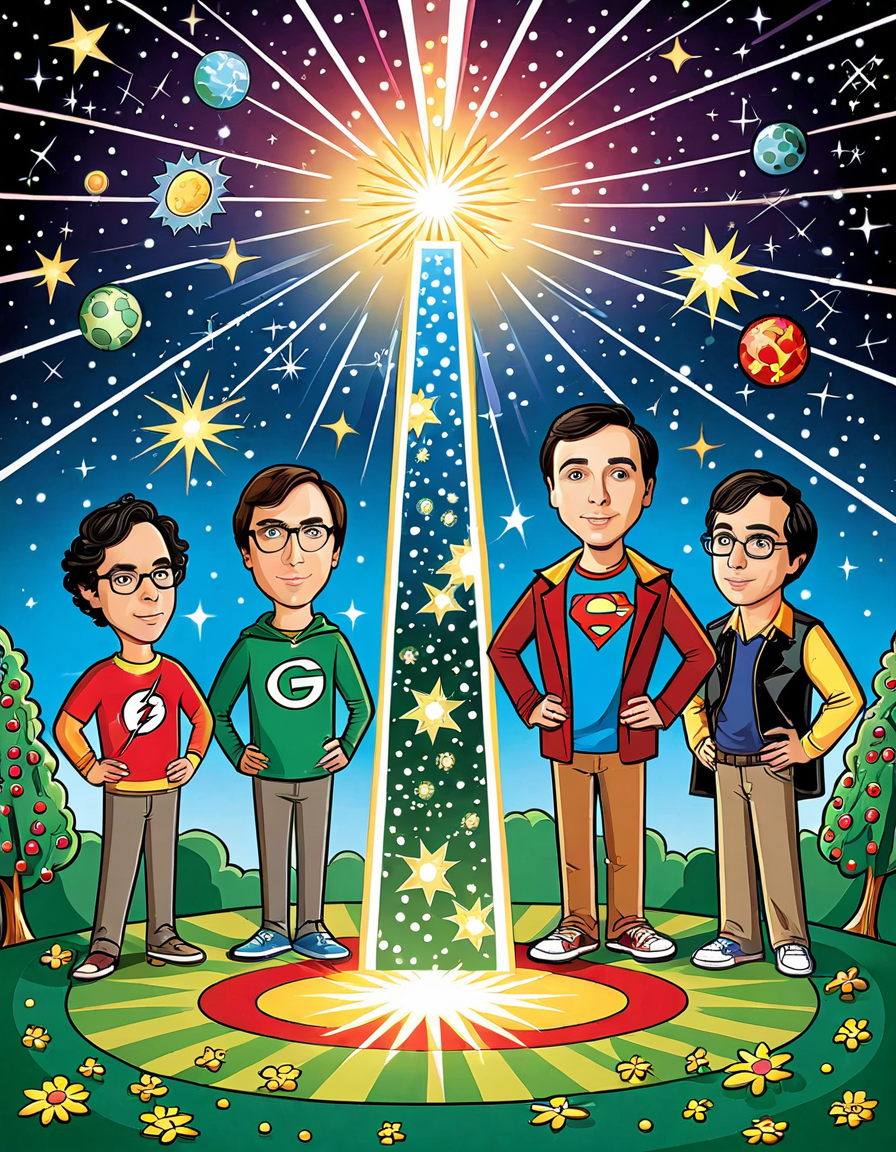
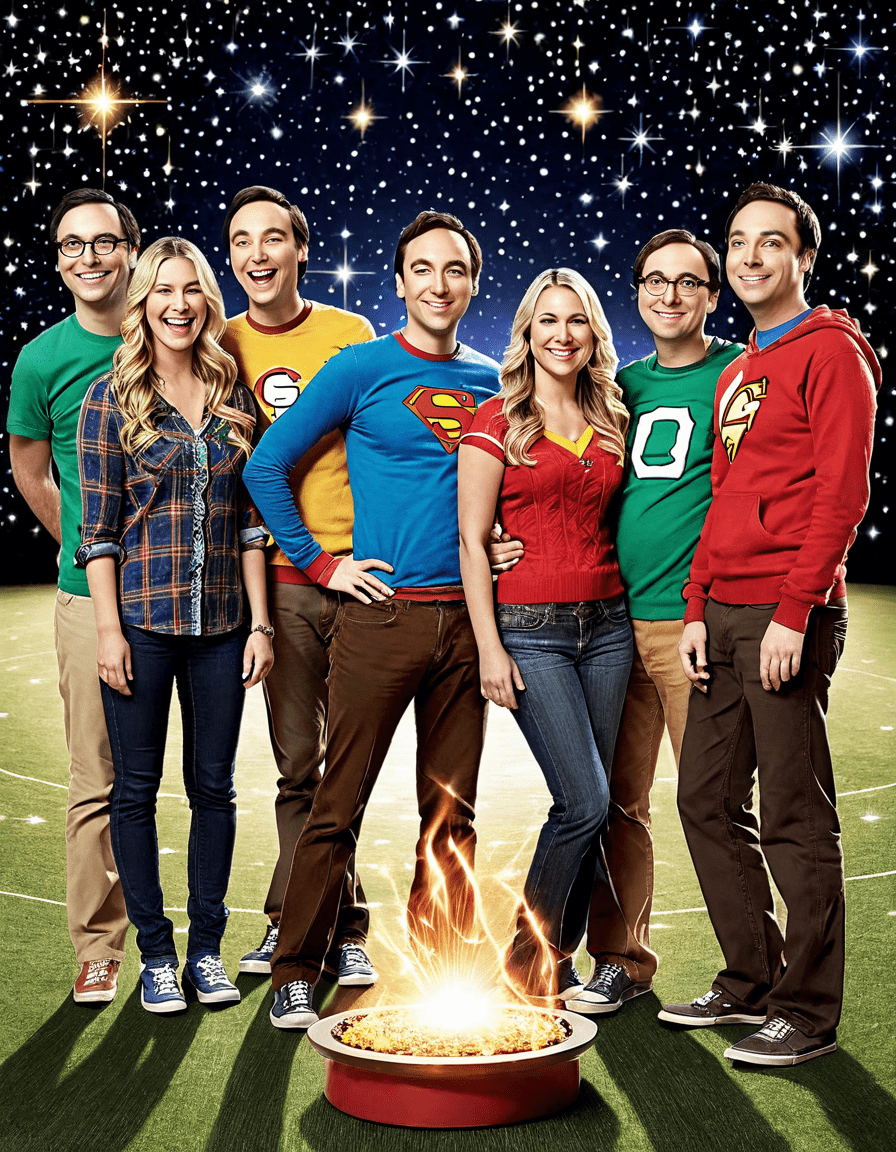
Remember the popular sitcom The Big Bang Theory? Beyond the laughs, it sparked curiosity about scientific concepts for millions. The show, airing from 2007 to 2019, effortlessly blended humor with intellect, promoting science in an engaging way. The Big Bang Theory cast, including stars like Johnny Galecki, Jim Parsons, and Kaley Cuoco, brought science into everyday conversations.
More than just entertainment, the show simplified tricky concepts like string theory and quantum mechanics. It’s amazing how a good laugh can bridge the gap between complex science and casual viewers. By making science accessible, the series has had a massive influence on promoting STEM (Science, Technology, Engineering, Mathematics) education. Isn’t it fantastic how entertainment can inspire the next generation of thinkers?
4. Beyond the Big Bang: Modern Theories and Developments
Recent developments are stirring the pot regarding our understanding of the cosmos. Concepts like the multiverse and cosmic inflation are challenging traditional ideas. Researchers such as Alan Guth have proposed that the universe ballooned rapidly right after the Big Bang. It’s like a cosmic sprint, shaping where stars and galaxies are today!
With technological advancements like the James Webb Space Telescope, researchers are pushing the envelope further than ever. This top-notch equipment is helping us explore distant galaxies and star formations, enhancing our grasp of how the universe has evolved. Exciting times lie ahead as we peel back more layers of the universe’s origin!
5. Future Implications: What Lies Beyond the Big Bang Theory
As we better understand the Big Bang Theory, we find it impacts various fields—philosophy, cosmology, and even existential thoughts. The idea that our universe stems from a single event sparks questions about existence and the nature of reality. Philosophical discussions arise regarding the anthropic principle: why is our universe hospitable to life?
These musings aren’t just academic; they flow into our daily lives. Grasping that we come from this colossal explosion forces us to reconsider our place in it all. It encourages bold thinking and adventurous approaches to life, pushing individuals to innovate and dream big.
Wrapping Up: The Enduring Legacy of the Big Bang Theory
The Big Bang Theory stands tall as the pillar of cosmological science. As research evolves, so will our understanding of the universe. The journey to comprehend our origins is not just about figuring out cosmic phenomena; it’s about exploring our existence on this Earth.
This legacy inspires curiosity across generations, fueling the engine for knowledge and understanding. Next time you gaze at the stars, remember: you’re looking at the remnants of the biggest event in history! The quest has just begun, and who knows what new discoveries lie ahead?
Whether you’re an aspiring entrepreneur or a curious learner, let the Big Bang Theory remind you that the universe is filled with possibilities waiting to be explored—so get out there and make your mark!
The Big Bang Theory: Fun Trivia and Interesting Facts
Cosmic Beginnings
The Big Bang Theory is the golden child of cosmology, proposing that our universe emerged from an incredibly hot and dense state about 13.8 billion years ago. It’s astounding to think about how everything—planets, stars, galaxies—sprang to life from a singularity! Much like how a simple bell pepper can be a cornerstone of your guinea pig’s diet, this singular event laid the foundation for everything we observe today. Isn’t it wild how something so massive in cosmic terms shares that connection to something as ordinary as a pet’s meal?
A Journey Through Time
The expansion of the universe has led to fascinating discoveries, like the Cosmic Microwave Background Radiation, which is essentially the “afterglow” of the Big Bang. This radiation paints a picture of the universe’s infancy, showing us what it was like just 380,000 years post-Big Bang. Imagine if we could witness that cosmic awakening—like moving through a time warp to a moment when the universe was as fresh as a new DreamWorks movie! The depth of this journey is akin to scaling a mountain with just a work backpack. You experience every layer of the landscape—the cold, barren rocks turning into fruitful valleys.
Stars and Beyond
Believe it or not, it took about 300 million years after the Big Bang for the first stars to ignite! Just as Tron Austin made strides in the tech scene, these stars paved the way for galaxies, creating a universe that’s still expanding today. Each twinkle in the night sky tells a tale of cosmic proportions, much like how Cabin in The Woods offers a unique twist on classic horror clichés. The Big Bang not only marked our cosmic birth but shaped the intricate tapestry of time and matter we call home. So the next time you gaze at the stars, remember that they’re not just lights in the sky; they’re remnants of a colossal event that started it all.