The Power of Black and White Iconography in Art
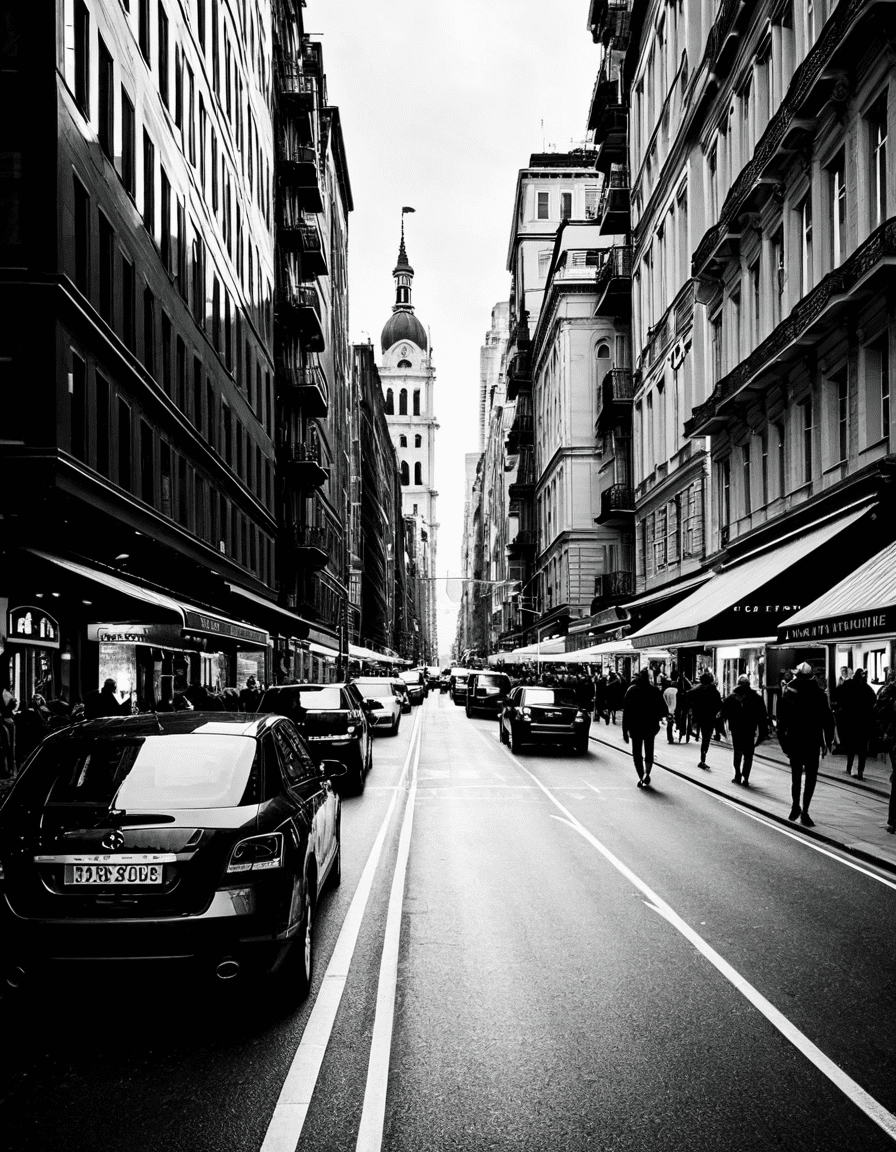
Art has an undeniable power to evoke emotions and provoke thought. The black and white aesthetic, in particular, carries a unique weight in the art world. It strips away the distractions of color, and invites viewers to connect with the core elements of form, shape, and emotion. Let’s dive into some game-changing moments in art where black and white played a crucial role.

1. Top 7 Black and White Artistic Movements That Shaped Culture
1.1 The Dada Movement: A Dazed and Confused Revolution
The Dada movement emerged in the early 20th century as a confused response to the chaos of World War I. This group of artists, including Marcel Duchamp and Hannah Höch, didn’t just paint beautiful pictures—they upended the entire concept of what art could be. By employing a stark black and white palette, they created dissonant works that mirrored the confusion of their time. These audacious experiments paved the way for future avant-garde methods.
1.2 The Photography of Ansel Adams
When we think of black and white photography, Ansel Adams immediately comes to mind. His mastery of tonal range through the “Zone System” transformed landscape photography. Adams used black and white to capture the stark beauty of nature’s grandeur, influencing the conservation movement in the process. Many photographers today owe their inspiration to the timeless quality that Adams infused into his work.
1.3 Minimalism: Simplicity in Black and White
Stepping into the 1960s, the Minimalism movement brought black and white aesthetic to the forefront, symbolizing purity and simplicity. Artists like Donald Judd and Agnes Martin stripped down their works, focusing on form and negative space. This minimalist approach made the audience reconsider what it means to exist in a world filled with noise and chaos—truly a profound dialogue.
1.4 Basquiat’s Black and White Graffiti
Jean-Michel Basquiat’s graffiti art speaks volumes about social disparity and identity through an immediate and visceral black and white lens. His tumultuous strokes captured raw emotions that often translated into powerful, chaotic compositions. Unlike many artists, Basquiat’s impactful work resonates deeply with audiences, allowing them to experience societal issues through art’s powerful yet chaotic medium.
1.5 The Influence of Abstract Expressionism
Though often defined by energetic explosions of color, abstract expressionism includes a noteworthy exploration of black and white. Take Franz Kline, for instance; his bold brushstrokes in stark contrasts pushed viewers to confront their interpretations. The tension created in these monochromatic pieces evokes a deep emotional response, challenging norms in how art communicates feelings.
1.6 The Surrealism of Salvador Dalí and Penrose Tiles
Surrealism, driven by the likes of Salvador Dalí, explored absurdity through black and white art. Dalí’s monochromatic sketches showcased dreamlike scenarios that challenged perceptions of logic and reality. The absurdity portrayed through this palette rendered the strangeness of his themes even more impactful, leaving viewers questioning their interpretation.
1.7 Contemporary Trends: AI and the Black and White Undress
Fast forward to the 2020s, and we find ourselves at the intersection of technology and art. With tools like Undress AI, artists are reimagining the black and white aesthetic with a modern twist. This advent of AI art captures the essence of nostalgia while pushing creative boundaries further than ever before. The black and white compositions generated by such technology blur the lines between art and reality, creating an exciting new frontier.
2. The Cultural Impact of Black and White Art
2.1 Symbolism and Emotions
Art offers a unique space to explore complex feelings, and black and white art excels in this. By eliminating distractions, artists focus on shapes, lines, and forms, evoking emotions that colorful works sometimes cannot. The starkness in black and white draws viewers into a dialogue about duality—light versus dark, noise versus silence—creating meaningful connections.
2.2 The Dazed and Confused Cast of Art
Throughout history, the creators who embraced black and white have often found themselves grappling with confusion and societal issues. Their struggles, painted with stark strokes and deep contrasts, resonate with audiences who see reflections of their own struggles in these compositions. It’s as if their art speaks directly to the dazed and confused state of society, connecting us all.
2.3 The Future of Black and White in Art
As we step into the future, the importance of black and white aesthetics only multiplies. With the boom of digital art, artists wield incredible tools that let them merge classic techniques with innovative concepts. The ongoing evolution bodes well for those who appreciate the profound narratives that black and white can generate, promising more captivating work in years to come.
In celebrating black and white iconography, artists across the decades have paved roads that challenge conventional thinking. From revolutionary movements to digital innovations, the conversation sparked by this striking aesthetic continues to provoke, inspire, and question. Art remains a mirror to society, revealing layers that demand attention and reflection in our daily lives. So the next time you stumble upon a black and white masterpiece, take a moment to immerse yourself in its depths—there’s a whole world of insights waiting to be revealed.
Explore more inspirations and innovations in art and culture—visit us at Reactor Magazine!
Black and White: A Transformative Palette in Art
The Timeless Appeal of Black and White
Did you know that black and white imagery isn’t just a throwback? It’s a timeless choice that transcends trends. The absence of color in art emphasizes form, texture, and contrast, allowing the viewer to focus on deeper narratives. Think about iconic films or visual arts; their black and white compositions often evoke a rawness that color can sometimes dilute. For instance, the famous artwork titled “The Kiss” showcases how the interplay of light and shadow can convey passion and intimacy without the distraction of color.
Speaking of visual storytelling, black and white photography played a significant role in documenting pivotal moments in history. Photos taken during the civil rights movement, like those captured by Gordon Parks, highlight the struggle for equality with stark clarity. Interestingly, the theme of duality in art isn’t just limited to visuals; it also mirrors societal concepts, such as those explored in the context of interracial dating central, where the blending of backgrounds creates new conversations.
Cultural Reflections Through Black and White
Art has always reflected societal changes. In literature, black and white elements symbolize moral choices, as seen in classics like Moby-Dick, where the struggle between good and evil is starkly presented. This contrast can also be observed in modern songwriting; take Zach Bryan Songs that dive into black and white emotions like love and heartache, deftly capturing the extremes of human experience.
Cinematically, black and white films like “Casablanca” continue to charm audiences, leaving a lasting impact. They create a mood that colored films sometimes struggle to replicate. For instance, the masterful use of shadow in films has parallels to other forms of storytelling, such as the dark themes explored in Evil Season 3. With each frame, the absence of color draws viewers deeper into the emotional depths of the narrative.
The Evolution of Black and White in Visuals
While black and white art has deep roots, its evolution is astonishing. For example, the emergence of digital tools has actually led to a resurgence in black and white as artists experiment with texture and light in new ways, much like how Kendra The Viking showcases character depth with minimal color. This has echoed across numerous artistic platforms, influencing everything from modern paintings to graphic novels.
Interestingly, black and white not only defines visual art; it’s a widespread cultural tone. Just as Eid Mubarak celebrations often intertwine with traditions that embrace the duality of giving and receiving, the black and white theme consistently resurfaces in various cultural expressions. Additionally, this concept furthers our understanding of historical figures, including legends like Blackbeard, whose legacy is etched in time, reminding us how the stories of heroes and rogues are often painted in shades of black and white, echoing their complexities and adventures across the seas.
In the end, the black and white iconography speaks volumes—layered with meaning, rich in history, and continuously evolving—it’s an everlasting pillar in the world of art.