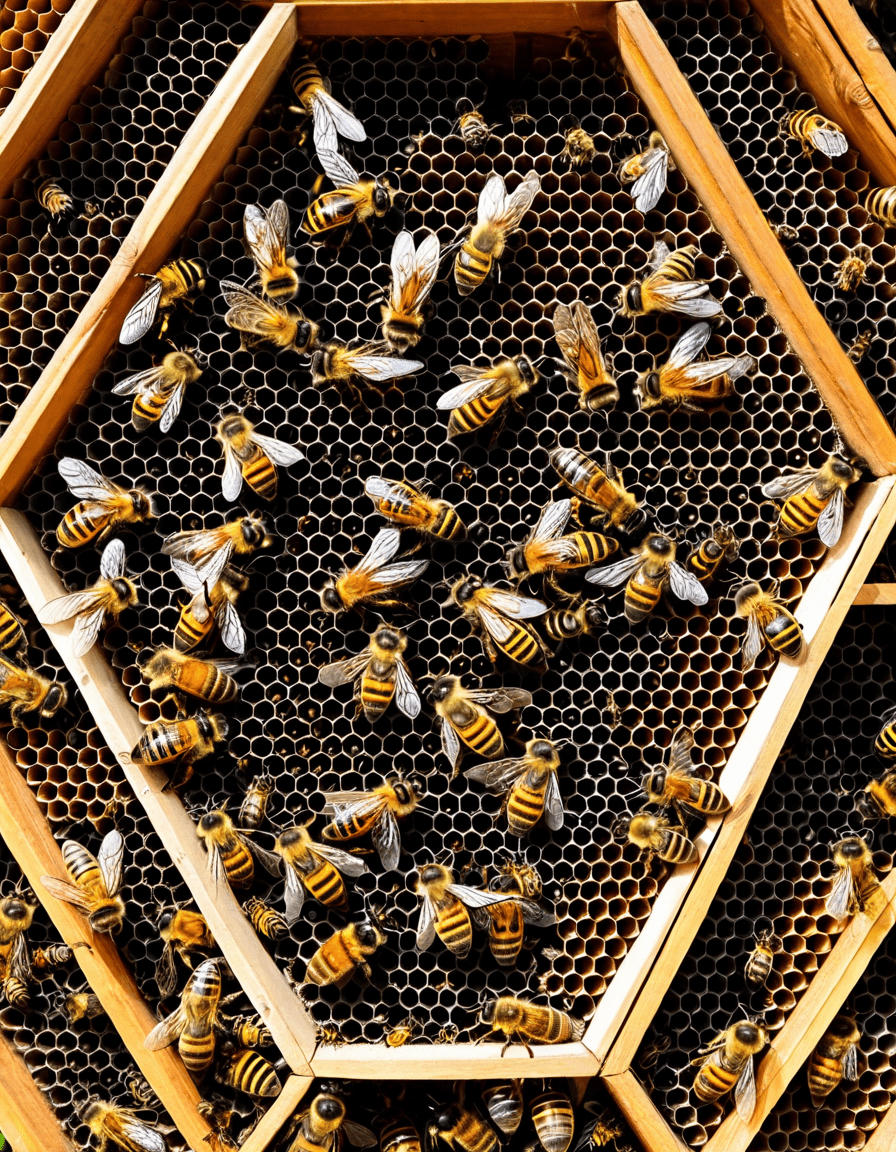
Welcome to the captivating world of the hive, a bustling center where the magic of nature unfolds. Bees are more than just pollinators; they are architects, apprentices, and community builders. As we dive into this intricate society, you’ll see how these tiny insects play a monumental role in our ecosystem and inspire innovation across various fields. So, let’s get buzzing and explore their fascinating lives!

The Hive: Architecture of Life
Within nature, few structures showcase the same intricacy and purpose as the hive. Think of it as a multifunctional hub—a nursery, a pantry, and a gathering place for the bee community. Constructed from beeswax, the hive’s design is a prime example of nature’s engineering prowess. The hexagonal cells aren’t just space-savers; they possess incredible strength and efficiency vital for the lifecycle of each bee, from egg to worker.
Recent studies indicate that this architectural genius serves as a blueprint for sustainable living. Inspired by the hive, engineers and architects are now designing buildings that focus on eco-friendly solutions. Just like the bees, these innovations aim to create a harmonious balance between nature and urbanization. The hive teaches us that we can find wisdom in nature’s designs, urging us to explore our creativity and think outside the box.
Transitioning from this architectural marvel to the biodiversity within, let’s take a look at some extraordinary species that make up this maverick ecosystem.

Top 5 Mavericks of the Hive: Unique Bee Species
While honeybees often get the limelight, plenty of other remarkable species deserve recognition. Here’s our countdown of five mavericks that showcase life within the hive ecosystem:
These quirky little bees take on a unique approach by cutting leaves to build their solitary nests. Unlike the communal nature of honeybees, they thrive alone. Each leaf segment is a thoughtful piece that highlights their adaptability and resourcefulness, reminding us of the power of individuality in a world that often pushes conformity.
Famed for their round, fuzzy bodies, bumblebees can brave cooler climates where other bees might struggle. They’re known for their buzz pollination, making them vital players in food production—especially for crops like tomatoes. These industrious creatures teach us the importance of persistence in the face of challenges.
Small yet mighty, sweat bees boast a captivating metallic sheen. While they often go unnoticed, they fulfill an essential role in maintaining biodiversity through effective pollination. Their story is a gentle reminder that even the tiniest players can have a huge impact in supporting ecosystems, echoing the idea that every contribution counts.
Male orchid bees are the flirts of the hive world, gathering scents and minerals to impress potential mates. This unique behavior fosters selective pollination, illustrating how strategy and aesthetics blend beautifully in nature. Their story offers insights into how mating rituals can influence ecological relationships—something we can reflect on in our ventures as well.
These robust bees have a knack for boring into wood, creating versatile nests. Their ability to adapt to various nesting materials underscores the resourcefulness that drives successful enterprises, drawing parallels between hive life and human innovation.
These five mavericks showcase just how diverse life in the hive can be, each contributing uniquely to the ecological tapestry we often take for granted.
The Helix of Life: Bee Behavior and Communication
When it comes to communication, bees operate on a whole different level, akin to a helix of intricate signals and dances. One standout example is the renowned “waggle dance.” This fascinating form of communication reveals the location of food sources and their distance from the hive. Thanks to recent advancements, scientists are now using smartphone technology to track and document these dances, capturing variations that hint at cultural differences among bee populations.
This sophisticated system of communication fosters cooperation and resilience within the hive community. It suggests that bees, much like us, rely on collaboration to thrive. Such insights underscore the importance of community in overcoming challenges, a lesson we can all apply in our lives and businesses.
The fallout from environmental changes is making headlines, especially concerning how it impacts our buzzing buddies. It’s vital to keep exploring these impacts to better understand our role in preserving bee populations.
Outsiders and Fallout: The Impact of Environmental Changes
As climate change accelerates, bees are facing unprecedented challenges. From habitat loss to pesticide exposure and fluctuating weather patterns, these small creatures bear the brunt of humanity’s footprint on nature. Recent data shows that up to 40% of bee populations are declining in various regions, ringing alarm bells for ecosystems that depend heavily on their pollination services.
Overshadowed by larger environmental issues, the plight of bees is an urgent call to action. Understanding this fallout not only raises awareness but invites innovative strategies from scientists and conservationists. Approaches to land management and habitat restoration are being explored, shedding light on the interconnectedness of human activity and bee survival.
Protecting bees is not just about saving one species; it’s about safeguarding our environment and food systems. Each of us can play a part in this mission, whether through activism, supporting sustainable practices, or simply sharing our knowledge about this crisis.
The Vortex of Innovation: Technology and Bee Conservation
Innovation is now entering the arena of bee conservation, bringing new hope for these vital insects. Cutting-edge technology, including smart hives equipped with sensors, allows us to monitor real-time data on bee health, activity, and environmental conditions. This vortex of reliance on technology marks a transformative approach to ensuring the survival of bee populations.
For instance, companies like BeeOtrial are leveraging unique monitoring systems to track hive health through analytics. The immediate availability of data enables quick interventions, helping to stave off colony losses before they escalate. This partnership between tech and biology illustrates that tackling big challenges often requires collaboration across disciplines.
Through these innovations, we start to sketch a future where bees and humans coexist symbiotically, reinforcing the idea that our fates are intertwined.
Sketching the Future: Artistic Inspirations from Bees
Beyond ecology and economy, bees have made significant marks in art and design. Renowned artists like Wolfgang Laib use beeswax in their creations, forging a connection between the fragility of bee populations and the beauty of art. These works provoke us to consider the aesthetic and functional importance of bees, extending their narrative beyond mere survival.
This intersection of art and activism inspires critical conversations around environmental stewardship. By showcasing bees as part of cultural dialogues, we foster a greater appreciation for their pivotal role in our lives and encourage actions to protect them.
As we conclude this exploration, we recognize that bees offer more than just a lesson in ecology—they invite us to reflect on collaboration, adaptability, and the interconnectedness of all life. The hive isn’t simply a structure; it’s a living embodiment of community, innovation, and resilience, urging us to sketch a brighter, more sustainable future for our planet.
In a world that’s rapidly changing, we must learn from these tiny architects and embrace the collective responsibility we hold for their survival. Whether through technological innovation, creative expression, or proactive conservation efforts, we can all contribute to safeguarding the hives—and thus, the very essence of life on Earth.
Let’s keep the conversation going and inspire one another to take action, creating a thriving ecosystem for generations to come.
Hive: The Amazing World of Bees
The Buzz About Hives
Did you know that an average hive can house anywhere from 20,000 to 60,000 bees? That’s a bustling community working hard to make honey and keep the colony thriving. Bees are social insects, and their hives are like cities. Each bee has its own role; the queen, workers, and drones all contribute to the hive’s success. Speaking of success, let’s not forget about how the honey they produce is not only delicious but also packed with health benefits. It’s a staple from the hive that many cannot resist, much like a good slice of cake at a musical gathering! If you’re curious about impressive individuals, check out Sajad Gharibi for some inspiration!
The Intriguing Hierarchy of Bees
Inside a hive, there’s a fascinating hierarchy going on. The queen bee, the mother of the hive, can lay thousands of eggs each day, ensuring the survival and growth of the colony. Worker bees, on the flip side, are responsible for gathering nectar, protecting the hive, and maintaining its cleanliness. Isn’t it interesting how each bee spins into its role? If these bees had a personality, you might even say they all play their part in a grand spin of life! Imagine the teamwork involved, kind of like a tightly choreographed dance in a musical, where everyone has a part to play—this is the way a hive operates!
The Hive’s Role in Our Lives
Hives don’t just serve the bees; they benefit us too! They’re essential for pollination, helping fruits and vegetables grow, which is crucial for our food supply. Fun fact: about one-third of the food we eat is made possible by pollinators like honeybees. As you enjoy your everyday foods, think about the little creatures working busily in their hives to make it all happen. It’s a hidden world, much like the various activities you can find in a Soapland—many layers intermingling to create a beautiful outcome! Plus, if you ever wondered about the average height of sports icons like Tom Brady, you’ll find surprising links between personal dedication and the intense teamwork that happens within a hive!
Next time you see a bee, remember that there’s an entire community buzzing with life in every hive. Whether you’re observing their industrious nature or enjoying honey, consider how each element of this fascinating ecosystem ties back to our own daily lives. Just as every jumper in your wardrobe has its purpose, every bee has a role that helps sustain nature’s balance. Now that’s food for thought!