
Clouds can tell you what your next move should be — if you know what to look for. Within minutes, the sky will reveal threats from tornadoes to volcanic ash; learning to read it is a survival skill every entrepreneur on the move should master.
clouds: Quick primer — why the sky can save (or end) your life
| Cloud type (genus & common) | Typical base altitude (approx) | Appearance | Formation mechanism | Weather / significance | Precipitation |
|---|---|---|---|---|---|
| Cirrus (Ci) | >6 km / >20,000 ft | Thin, wispy filaments or mares’ tails of ice crystals | Ice-crystal formation in upper troposphere from lifted/moist air or jet-level disturbances | Indicates upper-level moisture or approaching frontal system; can precede change in weather | None at surface; may signal precipitation within 24–48 h |
| Cirrostratus (Cs) | >6 km / >20,000 ft | Thin, translucent veil often producing halos around sun/moon | Widespread ice-crystal layer from gentle large-scale ascent aloft | Sign of approaching warm front or widespread moisture aloft | None at surface; often precedes continuous precipitation |
| Cirrocumulus (Cc) | >6 km / >20,000 ft | Small, white rippled patches or grains | Small-scale convection/waves at high levels; ice crystals or supercooled droplets | Indicates high-level instability or moisture; often harmless | None |
| Altostratus (As) | 2–6 km / 6,500–20,000 ft | Grayish to blue-gray, featureless sheet; sun dimly visible or obscured | Large-scale ascent in mid-troposphere (frontal systems) | Often precedes steady, widespread precipitation | Light to moderate continuous rain/snow if thickens to nimbostratus |
| Altocumulus (Ac) | 2–6 km / 6,500–20,000 ft | Gray/white patches, rolls, or waves; larger elements than cirrocumulus | Mid-level convection, wave activity, or lifted layers | Can indicate mid-level instability; morning castellanus can precede thunderstorms | Occasional light showers; convective variants may produce showers |
| Stratus (St) | <2 km / <6,500 ft | Uniform gray layer, often low and featureless; can resemble fog lifted above ground | Gentle, widespread ascent or radiational cooling forming shallow stable layer | Overcast, reduced visibility; associated with cool, stable conditions | Drizzle, mist, or light snow |
| Stratocumulus (Sc) | <2 km / <6,500 ft | Low, lumpy, rolling layers or patches with breaks | Weak convection or mixing in a stable shallow layer | Common in post-frontal or marine conditions; often persistent low cloud cover | Light drizzle occasionally; generally dry |
| Nimbostratus (Ns) | Base often <2–3 km but can extend higher | Thick, dark, featureless, low-to-mid sheet obscuring sun | Widespread, steady ascent in frontal systems producing deep, saturated layer | Produces prolonged, steady precipitation and low clouds; poor visibility | Continuous moderate to heavy rain or snow |
| Cumulus humilis (Cu humilis) | Typically <2 km / <6,500 ft | Small, cauliflower-like, flat bases, well-defined edges | Shallow thermals (surface heating) causing localized convection | Fair-weather clouds indicating shallow instability | None (rarely light) |
| Cumulus congestus (Cu congestus) | Base low, tops up to mid-levels (several km) | Taller, cauliflower towers with pronounced vertical growth | Stronger surface heating and buoyancy; vigorous updrafts | Showers, developing into deeper convection; sign of instability | Showers, sometimes heavy |
| Cumulonimbus (Cb) | Base often <2 km; tops to tropopause (up to 12+ km) | Massive, towering anvil-topped thunderclouds | Intense deep convection with strong updrafts, often along fronts or heat-driven | Thunderstorms, lightning, severe weather (hail, strong winds, tornadoes) | Heavy rain, hail, torrential downpours; localized intense events |
Understanding clouds is practical, not poetic. The same formations that create dramatic images for photographers also signal rapid, life‑threatening shifts in weather: hail, microbursts, pyrocumulonimbus, or lightning that strikes far from the storm core. Read the sky like a business leader reads market signals — fast, decisive, and prepared to act.
When you learn the language of clouds you gain lead time. That lead time converts into options: shelter, delay travel, reroute pilots, or evacuate a town. The NOAA Storm Prediction Center and local NWS offices publish watches and warnings, but visual cues let you protect yourself before an official alert arrives.
Your voice matters in crisis: call it in, warn neighbors, and push for action when you see the signs. That’s leadership in the field — connecting data from official channels with immediate on‑the‑ground observation to reduce harm.
One-minute cheat-sheet: the six cloud clues every non‑meteorologist should know
Every busy professional needs a one‑minute checklist. Look for: green‑tinged cumulonimbus, wall/shelf clouds, lenticular lenses over ridges, rapidly collapsing rain shafts, towering smoke columns capped with anvil tops, and sudden fog banks. These six clues map directly to immediate actions: shelter, avoid flying, buckle in, delay takeoff, evacuate, or pull off the road.
Practice the checklist visually. Spend five minutes each week scanning the sky at different times and conditions, and compare your notes to SPC outlooks to calibrate your eye. Combine your observations with tools (below) and you’re multiplying your safety margin.
Keep an emergency micro‑kit in your vehicle or office so the decision to act is simple. A compact NOAA Weather Radio, headlamp, N95 masks, and a basic first‑aid kit are small investments that pay when the clouds go kinetic.
How meteorologists at NOAA and the NWS read these signs (brief)
NOAA and the NWS combine satellite, radar, surface observations, and trained spotter reports to interpret cloud signatures. Radar characterizes storm structure (reflectivity, velocity), while trained spotters describe what radar can’t see: a collapsing wall cloud or emergent mammatus. That human+instrument fusion is why official warnings often follow spotter calls.
The Storm Prediction Center issues convective outlooks and mesoscale discussions that translate these inputs into probabilistic risk. Understanding the SPC’s categories — marginal, slight, enhanced, moderate, high — helps you weigh whether a dramatic sky means immediate evacuation or monitoring. For deep dives, the SPC website and local NWS briefings remain the authoritative sources.
Make the official data your backbone, and the visual cloud cues your early warning system. That approach turns passive observers into proactive protectors.
Tools to carry: NOAA Weather Radio, Storm Prediction Center outlooks, local NWS apps
A small gear list yields huge returns. Carry a NOAA Weather Radio and install your local NWS app for push warnings; subscribe to SPC outlooks for severe convective guidance; add a lightning detection app for outdoor activities. These tools cut decision time and give authoritative, location‑specific guidance.
In addition to tech, keep a printed evacuation map and a simple checklist of actions for each cloud cue. The physical map doubles as a planning tool if power or cell service fails. Treat these tools as part of your daily carry — like a wallet or laptop — and they’ll save you in an emergency.
If you want atmospheric color context or lighter reading, Reactor Magazine has pieces on urban light and mood like moonlight that show how light interacts with the sky; they’re not survival guides, but they train your eye to subtle changes.
1. Could green skies be your tornado alarm?
Green‑tinged skies above towering cumulonimbus frequently indicate intense moisture and hail‑loaded updrafts — the kind of supercells that spawn tornadoes. The color comes from sunlight filtering through large hail and water droplets; when you see it, your odds of severe weather are much higher.
A green sky with lowering wall clouds or an approaching shelf is a visual red flag. Many people dismiss unusual colors as “pretty” — don’t. Treat green as a risk cue and move toward shelter immediately.
Combine what you see with official warnings. If a tornado warning or tornado emergency is issued for your area, use the visual cue as confirmation to act without delay.
What green‑tinged cumulonimbus looks like — shelf clouds, wall clouds, mammatus
A shelf cloud is a low, horizontal wedge that often precedes a squall line; it frequently appears to roll and suggests strong straight‑line winds. A wall cloud is a localized lowering beneath the storm’s rain-free base and can be the birthplace of tornadoes. Mammatus are pouch‑like protuberances on the underside of an anvil — dramatic but not always tied to tornadoes; however, they signal intense instability.
Visually, a green tint over a dark, rotating wall cloud or a lowering base with debris at ground level is the most dangerous combo. If you see rotation, funneling, or a fast‑approaching low cloud base, don’t wait for sirens — move to a basement or interior room.
Photographing these features helps spotters and NWS verification, but never sacrifice safety for a photo. Clip a quick timestamped image from a safe shelter to help outreach and alerts later.
Why green often precedes hail and tornadic supercells (Storm Prediction Center explanation)
The Storm Prediction Center explains that deep, moisture‑rich updrafts with large hail scatter green wavelengths of sunlight, producing the hue. Those updrafts also sustain the rotating structures and precipitation loading that increase tornadic risk. In short, green skies are a symptom of severe, well‑organized convection.
Research and SPC reports show that hail core proximity and large hail aloft increase the chance of tornado formation in discrete supercells. So when you see green, expect two hazards: damaging hail and potential tornadoes. That dual threat should push you to immediate protective action.
Real-world saves: lessons from the Joplin (May 22, 2011) and Moore, OK (May 20, 2013) tornadoes — how spotters and NWS warnings reduced casualties
Joplin and Moore were catastrophic but instructive. In Joplin, the EF5 tornado killed 158 people; post‑event analyses highlighted communication breakdowns and people unaware of sirens or underestimating visual cues. Moore’s 2013 EF5 had fewer fatalities than its intensity suggested, due in part to widespread warning dissemination, mobile spotter reports, and pre‑event drills in schools and businesses.
These events show two things: first, warnings only save lives when people have plans; second, trained spotter networks and swift NWS messaging measurably reduce casualties. Community preparedness — drills, shelters, and education — changed outcomes between similar high‑intensity storms.
If you lead a team or company in tornado alley, run quarterly drills, map safe rooms, and practice communicating by both hightech and lowtech channels.
What to do in 60 seconds: where to shelter, what to take, how to use your NOAA radio
If you have 60 seconds: move to an interior room on the lowest floor with no windows, cover yourself with a mattress or heavy blankets, and keep your phone and NOAA Weather Radio with you. If you’re in a vehicle and a sturdy shelter is unavailable, lie flat in the lowest ditch away from cars and cover your head; do not shelter under overpasses.
Your NOAA Weather Radio provides continuous updates; turn it on immediately, set it to tone mode for alerts, and keep batteries fresh. If you have a helmet, wear it; if not, use a heavy bag or pillow to protect against debris.
When storm passes, wait for official all‑clear before emerging and check for hazards like downed power lines and gas leaks.
Expert tip: Reed Timmer on visual cues storm chasers use (video/field report pointers)
Prominent storm chasers like Reed Timmer emphasize watching cloud motion and structure rather than chasing a rotating funnel in the open. He teaches that inflow bands, raveling of the wall cloud, and abrupt changes in precipitation patterns are as informative as rotation you can see.
Timmer’s field reports reinforce disciplined observation and conservative decision‑making: when in doubt, take shelter. Study recorded chaser footage to train your eye on safe, repeatable visual cues rather than adrenaline‑driven pursuit.
For motivational perspective on focused, disciplined action in crises, revisit human narratives and training pieces across research and media, which build the mental muscle to act quickly and calmly.
2. Don’t fly into ash: Eyjafjallajökull (2010) and the jet‑engine trap
Volcanic ash clouds look like heavy, dirty smoke with anvil‑like spread at altitude and can travel thousands of miles. The 2010 Eyjafjallajökull eruption in Iceland shut down large parts of European airspace, disrupting travel and highlighting an underappreciated aviation hazard: ash clouds are invisible to some cockpit instruments but ruin engines.
Pilots and airlines now treat ash advisories seriously because history shows the price of ignoring them. The BA Flight 9 incident in 1982 over Indonesia demonstrated that an airplane can lose power after flying through ash, and ICAO guidance now formalizes avoidance and diversion protocols.
If you’re a traveler, treat airline ash advisories and SIGMETs as non‑negotiable reasons to delay flights; safety beats schedule every time.
What volcanic ash clouds look like from the ground and cockpit
From the ground, ash clouds can appear brown‑grey and dense, often accompanied by a gritty fall and poor visibility. From the cockpit, ash may cause static on weather radar, a sulfurous smell, or fine dust on windshields and instruments. Pilots report a sudden dimming of engine instruments and abrasive erosion to cockpit windows.
Avoid visual complacency: ash clouds at cruise altitude may not be obvious on approach but can coat aircraft systems rapidly. If you detect smell or visual haze, report it as a PIREP immediately and follow diversion guidance.
Protect yourself on the ground by limiting outdoor exposure, sealing windows, and using masks to reduce inhalation of fine particles.
Why ash ruins jet engines — ICAO guidance and the BA Flight 9 / Mount Galunggung (1982) precedent
Ash melts in the high heat of combustion chambers and then resolidifies on turbine stages, causing erosion, blockage, and flameouts. BA Flight 9 lost all four engines after ingesting volcanic ash in 1982; the crew restarted the engines after descending into cleaner air and reducing thrust, a rare and dangerous recovery. ICAO and the aviation community now treat ash encounters as emergencies with clear diversion and avoidance protocols.
Post‑2010, the International Civil Aviation Organization (ICAO) created global ash advisory centers and refined guidance on permissible exposure. Pilots and dispatchers use SIGMETs and volcanic ash advisories to reroute or delay flights, and airlines incorporate volcanic risk into operational decision frameworks.
The aviation lesson is simple: do not fly into ash. Prevention and avoidance are the only safe strategies.
Aviation safety checklist: pilot PIREPs, SIGMETs, and when to divert — FAA and ICAO protocols
Pilots should file PIREPs (pilot reports) when ash is suspected and heed SIGMETs and volcanic ash advisories from VAACs (Volcanic Ash Advisory Centers). Diversion criteria include reported ash, visible ash clouds, and instrument anomalies consistent with ash ingestion. Dispatchers and airlines must prioritize safety and, in many jurisdictions, are empowered to cancel flights for ash risk.
Passengers should listen to crew instructions and expect delays when ash advisories are active; airlines are following updated FAA and ICAO protocols that value safety over punctuality. Delay your trip if advisories warn of ash along your route.
For background context on volcanic ash advisory practices, aviation safety offices and the Icelandic Meteorological Office provide technical reports and post‑event analyses.
Civilian action: how to interpret airline advisories and when to delay travel
If your airline issues an advisory referencing ash, call and rebook proactively; show flexibility because the alternative is in‑flight engine failure. Watch for SIGMETs in flight tracking apps and check airline notices for ash‑related cancellations or reroutes.
For urgent travel needs, consider ground alternatives until the ash cloud clears and airlines receive clearance. Your life and the safety of crews outweigh schedules and deadlines.
Source & reading: Icelandic Meteorological Office post‑2010 reports; ICAO ash advisories
For post‑Eyjafjallajökull technical summaries and operational changes, consult the Icelandic Meteorological Office reports and ICAO advisories, which document how ash clouds move and how aviation practices adapted. Those documents reveal the operational thresholds and communication protocols that keep the industry safer today.
If you want a lighter cultural detour while waiting out travel disruptions, unusual pop culture pages sometimes entertain — for example, learn more about the cast Of squid game as downtime reading while you delay.
3. Mountain waves and lenticulars: pilots’ silent killers

Lenticular clouds look like smooth, stacked flying saucers over ridgelines and indicate strong lee waves. These formations predict severe clear‑air turbulence and rotor clouds below that can toss an aircraft violently, especially small planes and helicopters.
Even when skies are clear elsewhere, mountain waves can produce extreme vertical motions and icing that overwhelm an aircraft. Pilots respect lenticulars because the turbulence they imply is non‑convective and often invisible to radar.
If you see lenticulars while driving in mountain country, expect sudden crosswinds and gusts; secure loads and delay exposed outdoor work.
Spotting lenticulars and rotor clouds — the “flying saucer” warning sign
Lenticulars are smooth, lens‑shaped clouds that remain stationary relative to terrain. Rotors are ragged, turbulent clouds beneath the wave crest and are the dangerous part, producing shear and sudden downdrafts. Spotting either should trigger caution for aviators and ground crews.
Photograph their position relative to the ridge to help pilots understand wave orientation. Mountain weather briefing centers and flight service stations issue advisories based on observed lenticular development and PIREPs.
When flying VFR, avoid the lee side of major ranges when lenticulars are present; IFR flight plans should include rotor‑aware routing and altitude changes.
The danger: severe clear‑air turbulence, sudden altitude excursions and icing (FAA brief)
The FAA warns that mountain waves can create severe turbulence without visual thunderstorm cues and can generate icing conditions in moist, noise‑free environments. Aircraft may experience sudden altitude excursions of hundreds of feet. These surprises imperil passenger safety and structural integrity.
Flight crews are trained to avoid known wave areas or to use conservative airspeeds and altitude changes when encountering them. Modern forecasting tools and PIREPs help crews route around the worst conditions.
Passengers can reduce risk by keeping seatbelts fastened at all times when seated and following crew instructions promptly.
Case study: PIREPs over the Colorado Front Range and Denver turbulence advisories
The Colorado Front Range consistently produces strong lee waves that have generated numerous PIREPs reporting severe turbulence for light and transport aircraft. Denver Center and local FSS routinely issue advisories when pilot reports and meteorological models indicate rotor development.
These case studies underscore the importance of filing accurate PIREPs — they protect subsequent flights and build situational awareness for ATC and dispatchers. Institutionalized reporting and conservative routing reduced incidents over time.
If you travel in such regions, monitor local FAA advisories and be ready for delays.
If you’re a passenger: seatbelt protocol and crew instructions that save lives
Fasten your seatbelt when seated, follow crew briefings, and secure loose items that become projectiles in turbulence. If the crew asks you to remain seated, comply immediately — early compliance prevents injuries.
Carry necessary medications in a carry‑on and stow heavier bags under the seat in front of you. These small steps matter when a flight encounters unexpected turbulence.
Expert voice: FAA turbulence guidance and pilot training notes
FAA guidance emphasizes preflight weather briefings, conservative routing, and the critical role of PIREPs in alerting the aviation community. Pilot training stresses avoiding areas where lenticulars and rotors are observed and practicing recovery techniques for abrupt altitude excursions.
This conservative, learned caution is what keeps modern aviation safe — and it’s applicable to every leader managing risk: anticipate, gather data, and act decisively.
4. Microbursts, shelf clouds and the JFK disaster that changed aviation
Microbursts are powerful, localized downdrafts that can slam an aircraft toward the ground and create lethal wind shear on takeoff and landing. The 1975 crash of Eastern Air Lines Flight 66 at JFK due to microburst‑induced wind shear changed aviation safety forever.
Airports now deploy Doppler radar, wind shear detection, and standardized crew procedures to detect and respond to microbursts. Those investments dramatically reduced accidents related to wind shear, but vigilance remains essential.
As a traveler, watch for airline notifications and be willing to refuse takeoff if runway conditions and advisories suggest wind shear risk.
Visuals to never ignore: curly virga, collapsing rain shafts, rapidly rolling shelf clouds
Virga — precipitation that evaporates before reaching the ground — can indicate strong downdrafts when it collapses to the surface. A collapsing rain shaft or a rapidly advancing shelf cloud often precedes microburst conditions. These visuals happen fast and require immediate assessment.
If you see a collapsing rain shaft during approach or on a runway, assume wind shear is possible and heed ATC and crew advisories. Outside the cockpit, give storms a wide berth and avoid open fields during such displays.
The appearance of a fast‑moving, low shelf cloud should prompt immediate readiness to shelter: these clouds are associated with dangerous outflow winds and sudden gusts.
How microbursts produce lethal wind shear — the Eastern Air Lines Flight 66 (JFK, 1975) turning point
Microbursts create a concentrated column of rapidly descending air that hits the ground and spreads outward, producing intense shear over short distances. Flight 66 encountered this outflow during approach, losing lift and crashing; the event catalyzed research into low‑level wind shear detection and cockpit procedures.
Post‑accident investigations by the NTSB and FAA led to technological and procedural changes: wind shear alert systems, improved pilot training, and better weather data for dispatch and ATC. Those reforms cut microburst‑related accidents to near zero in controlled airspace.
Understanding the physics — sudden down drafts turning into horizontal shear — helps pilots and ground operators plan safer departures and arrivals.
How airports and pilots detect and respond now: Doppler radar, wind shear alerts, crew procedures
Modern airports use terminal Doppler weather radar, LIDAR, and surfacebased sensors to detect microburst signatures. Wind shear alerts are transmitted to ATC and cockpit displays, and crew procedures include missed approach or go‑around protocols when wind shear is present.
Dispatchers and airports may temporarily close runways or delay operations to protect passengers. These collective actions are the backbone of risk mitigation in terminal areas.
For passengers, taking a short delay is a small price for safety; the systems in place exist because of past tragedies.
Action steps for travelers: what gate/airline updates to watch and when to refuse takeoff
Watch ATC and airline messages about wind shear, and ask gate agents about local weather impacts. If advisories indicate low‑level wind shear or rapid storm development on the field, request confirmation that the aircraft has received updated weather briefings.
Refuse takeoff politely if you believe the aircraft faces an undue hazard — airline crews support safety‑first decisions. Your insistence can trigger additional checks that protect everyone on board.
Source: NTSB/FAA historical reports and procedural changes
NTSB investigations and subsequent FAA procedural changes following Flight 66 are primary sources documenting the microburst problem and its solutions. Those documents trace the technological investments and training programs that transformed aviation safety at airports worldwide.
For leadership teams, these reports serve as case studies in proactive institutional change after failure — a blueprint for turning disaster into long‑term safety gains.
5. Pyrocumulonimbus: wildfire clouds that make blazes explode
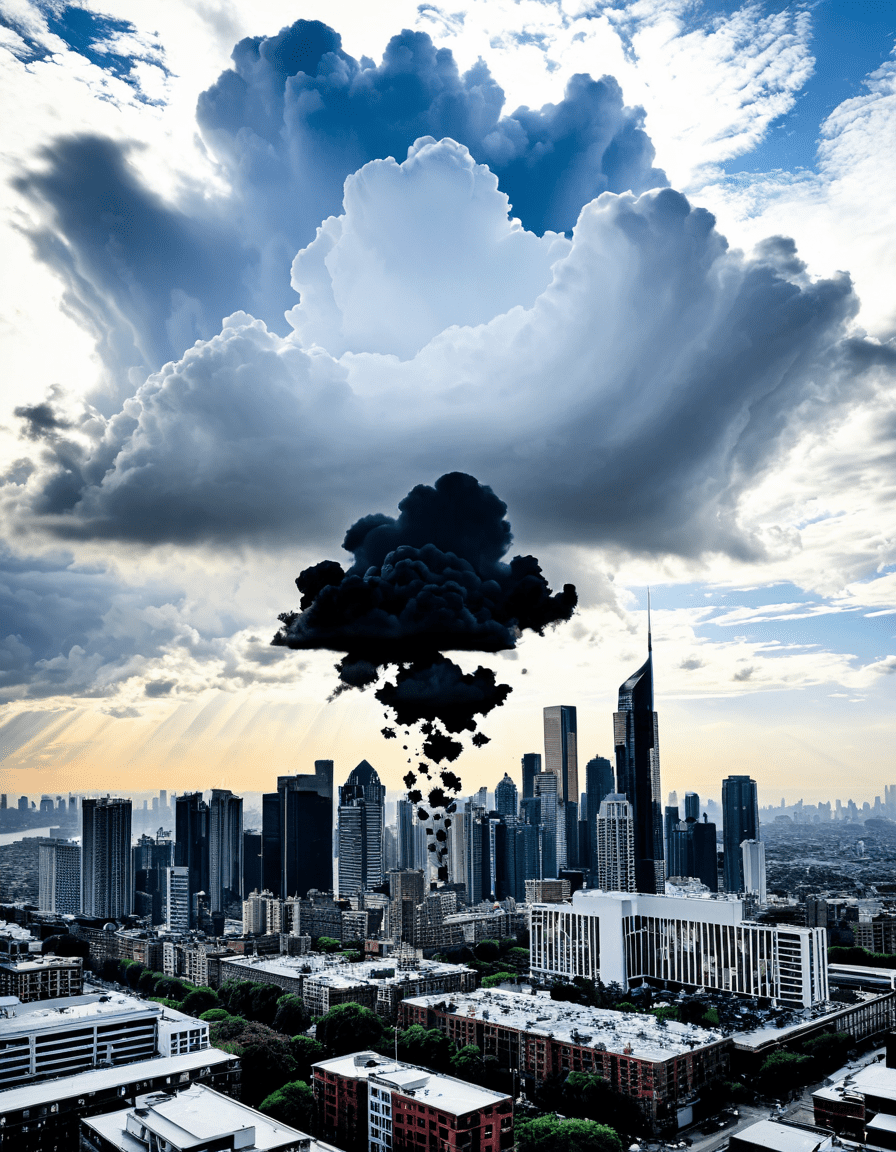
Pyrocumulonimbus (pyroCb) clouds are fire‑generated thunderstorms: towering smoke columns that form their own convective systems and can produce lightning, hail, and sudden shifts in fire behavior. These clouds turn a contained wildfire into a regional conflagration by lofting embers and creating new ignition points far ahead of the front.
Because pyros generate lightning, they spawn additional fires and complicate suppression. They can also produce erratic winds that trap residents and first responders, making timely evacuation essential.
Watch for towering, cauliflower‑like smoke columns with an anvil top; if you see them near a fire, consider evacuation now, not later.
What a pyrocumulonimbus looks like — smoke columns that become thunderstorms
A pyroCb begins as a dense, dark smoke plume that rapidly grows vertically into a thunderstorm anvil, sometimes resembling a volcanic eruption cloud. The top often spreads into an anvil and may produce pyrocumulus clouds around the periphery. From a distance, these clouds can look spectacular — but they’re a sign of extreme danger.
The vertical energy within a pyroCb can loft burning embers many kilometers, creating spot fires that outpace evacuation routes. Their rapid life cycle makes them unpredictable and deadly for anyone caught nearby.
If you spot such a plume and you are in the watch area, assume conditions can change from manageable to catastrophic within an hour and plan accordingly.
Why these clouds supercharge fires: ember lofting, lightning generation and rapid spread (Bureau of Meteorology/CSIRO findings)
Research from agencies like Australia’s Bureau of Meteorology and CSIRO shows that pyroCbs inject hot, dry air and embers into upper levels where winds carry them long distances, starting new fires. They also produce lightning that ignites fresh fuel beds downwind. The result is a multipronged spread mechanism that overwhelms conventional containment strategies.
PyroCbs therefore turn single perimeter fires into complex, multi‑front events that are much harder to fight. Their formation is linked to extreme heat, high fuel loads, and critical ember production from crown fires.
Managing ember exposure by creating defensible space and following evacuation orders is the most effective civilian strategy against pyroCb‑driven escalation.
Black Saturday (Victoria, 2009) and Black Summer (Australia 2019–20): examples of fire‑driven storms that worsened conditions and trapped people
Australia’s Black Saturday and Black Summer events included documented pyroCb development that worsened conditions dramatically. These events showed how fire‑generated storms caused rapid fire spread, unpredictable wind shifts, and even pyrogenic lightning that started new ignitions across large regions, complicating evacuation and emergency response.
Post‑event analyses emphasized early warnings, better evacuation planning, and public messaging to reduce entrapment. Community education on ember protection and evacuation thresholds changed outcomes in subsequent seasons.
If you live in a fire‑prone region, study those case studies — they show the narrow window you have to act when pyroCbs appear.
Immediate survival moves: evacuation timing, N95 masks (EPA/CDC), sheltering from ash and embers
Evacuate early when told; ash and embers reduce air quality and create breathing risks. Use N95 masks or P100 respirators recommended by the EPA and CDC to filter fine particulate matter, and shelter indoors with HVAC systems on recirculate if evacuation isn’t yet possible.
Protect skin and eyes from embers and falling ashes; minimize outdoor activity. Prepare a “go bag” with documents, medications, and pet supplies, including a solid dog carrier or doggy crate if you evacuate with animals.
Expert reading: Bureau of Meteorology research and local fire authority guidance
The Bureau of Meteorology and CSIRO publish technical reports on fire‑weather interactions and pyroCb dynamics. Local fire authorities provide community‑specific guidance on evacuation routes, defensible space, and ember protection. Follow both scientific and local recommendations; the combination gives you strategic insight and practical instructions.
For practical survival guidance and community plans, rely on local fire agencies first — they know terrain, fuel, and access constraints.
6. Fog, freezing fog and the highway mass‑pileup risk — what NTSB warns
Fog collapses visibility and compresses driver reaction times, creating chains of collisions that can be catastrophic on highways. Freezing fog adds slick ice to the visibility crisis, turning a visibility problem into a traction one. The NTSB repeatedly warns that sudden visibility loss on high‑speed roads is a top killer.
Preparation, technology, and calm decision‑making reduce the risk: slow down, use fog lines and low beams, and, if necessary, pull well off the road and wait for visibility to recover.
Types of fog to fear: advection, radiation fog and freezing fog — how they form
Advection fog forms when moist air moves over a cooler surface, and it can persist for hours across highways. Radiation fog develops overnight with calm winds and clear skies and can appear rapidly at dawn. Freezing fog occurs when supercooled droplets freeze on contact, creating black ice hazards.
Each fog type has distinct triggers and persistence; understanding local climatology helps you predict where and when to expect sudden visibility issues. Coastal corridors and valleys deserve special attention for advection and radiation fog.
When local DOTs issue fog advisories, treat them as actionable warnings rather than background information.
Why visibility collapse kills: speed/spacing collapse and chain‑reaction crashes (NTSB analyses)
NTSB analyses show that multi‑vehicle pileups occur when a few drivers fail to slow sufficiently and others cannot react due to compressed spacing. At highway speeds, a 1‑second reaction time gap becomes insufficient when visibility drops to tens of feet. Drivers behind the initial collision have no time to brake.
The fatality pattern is often “accordion” crashes where vehicles rear‑end and pile up; hazardous materials and fires magnify the toll. The NTSB calls for better detection, signage, and driver education to prevent these outcomes.
Adopt low speed and increased following distance the moment visibility drops.
On the road: how to drive when visibility drops (low beams, fog lines, reduce to crawl speed), and when to stop
Use low beams (high beams reflect back and worsen glare), follow fog lines or the right edge of the road, and reduce speed dramatically — if you must stop, pull completely off the roadway and set hazard lights. Do not stop in travel lanes and avoid sudden lane changes.
If fog reduces visibility below 100 feet, consider stopping in a safe turnout or sheltering until conditions improve. Keep in mind that many modern vehicles have adaptive lighting and lane assist, but those systems are no substitute for conservative driver behavior.
For commercial drivers, follow company protocols and notify dispatch if conditions force a delayed arrival.
Technology that helps: roadway fog sensors, state DOT alerts and variable message signs (examples: Caltrans, Minnesota DOT)
State DOTs deploy fog detection systems, LED warning signs, and variable speed limits to manage traffic during low‑visibility events. Agencies like Caltrans and Minnesota DOT maintain real‑time road condition pages and variable message signs that help drivers make informed decisions.
Subscribe to state DOT alerts when traveling long distances and watch variable message signs near known fog hot spots. These systems reduce surprise and give you a safer margin to act.
Real example: DOT response plans that reduced fatalities in recent mass‑fog incidents
Some DOTs instituted active warning systems and temporary closures during intense fog episodes, which reduced secondary collisions in subsequent events. After analyzing pileups, agencies prioritized dynamic messaging and law enforcement closures to keep traffic out until visibility recovered.
Those proactive decisions prevented additional casualties and serve as a model: invest in detection and be willing to stop traffic when conditions demand it.
If you want a distraction during a safe pause, check a human‑interest piece like hidden pregnancy Signs while you wait — but only after you’re safely parked.
7. Lightning from the anvil: how “bolts from the blue” catch people off‑guard
“Bolts from the blue” are cloud‑to‑ground lightning strikes that originate in the anvil of a thunderstorm and travel miles horizontally before striking clear areas downwind. NOAA lightning research documents strikes occurring 10–15 miles from the main storm core — far outside the visual storm area.
These strikes kill and injure people who believe they are safe under a bright sky. Because the strike originates from the overhanging anvil, the sky above a seemingly blue area can still be lethal.
Treat any thunder heard as an immediate cue to seek enclosed shelter; don’t gamble on distance or a clear horizon.
What “bolt from the blue” means — lightning that strikes miles from the storm core (NOAA lightning research)
NOAA studies show that the anvil top of a storm can produce horizontally traveling lightning that descends miles away from the parent cell. These bolts are particularly dangerous because they strike areas not covered by visual storm effects or immediate radar‑based warnings for people outside the main storm.
The practical implication: if you can hear thunder, you are within striking distance. NOAA’s guidance is conservative and rooted in observed strike distances.
Include lightning detection apps in your outdoor planning toolkit to get faster warnings than raw visual observation alone.
Why being under a seemingly harmless sky can still be lethal
Anvil‑propagated lightning often strikes picnic grounds, golf courses, and open water where people think they’re safe. The electrical charge travels long distances aloft before descending; from the ground perspective, the sky can look mostly blue.
This mismatch between perceived safety and real risk explains many tragic, preventable deaths. Awareness and rapid sheltering are the antidotes.
Organizers of outdoor events should have lightning safety protocols and a predetermined shelter plan.
Rapid action: 30‑30 rule, seek enclosed shelter, avoid metal and water — NOAA/NWS safety checklist
Follow the 30‑30 rule: if the time between lightning and thunder is 30 seconds or less, seek shelter; wait 30 minutes after the last thunderclap to resume activities. Seek a fully enclosed building or vehicle with a metal roof and closed windows, and avoid trees, metal fences, and open water.
If caught outside with no shelter, minimize height and contact with the ground (crouch low on the balls of your feet) and avoid isolated tall objects. Do not use umbrellas or metal equipment that attract strikes.
NOAA and NWS publish clear, actionable lightning safety guidance; follow it strictly.
Field case: hikers and spectators struck distant from visible storms — NOAA/NWS summaries
Multiple incident reports show hikers and spectators struck by bolts from the blue while the main storm remained several miles away. The victims often delayed moving to shelter because the storm did not look threatening. These cases emphasize the need for pre‑activity planning and quick response.
Outdoor leaders must monitor lightning detection networks and pull participants to shelter at the first hint of thunder. The cost of a canceled hike is trivial compared to a lightning casualty.
Who to follow for alerts: local NWS, lightning detection networks and smartphone apps
Follow your local NWS office for watch/warning updates and use lightning detection networks that give you strike‑level data. Smartphone apps that map lightning in real time are valuable when you’re outdoors and away from NOAA radio reception.
For broader reading on atmospheric effects and human reaction to weather, Reactor Magazine’s lifestyle and culture pieces such as Fences and skin can help you understand peripheral impacts like smoke and sun exposure while you prepare.
Final sky checklist — seven quick moves to add to your survival plan
This is your tactical one‑page survival plan. For each cloud secret, one direct action:
One-line reminders matched to each cloud secret (what to spot + what to do)
Essential gear list: NOAA Weather Radio, N95, headlamp, vehicle emergency kit, evacuation map
Pack these essentials and keep them accessible: NOAA Weather Radio, N95 respirators, headlamp with fresh batteries, compact vehicle emergency kit (jumper cables, water, high‑visibility vest), paper evacuation map, and a robust pet carrier. Also include a charged power bank for cell devices and printed emergency contacts.
If you have pets or family with special needs, tailor your kit and practice exits. For cultural reading while you wait out an event, Reactor’s narrative pieces like The return can be a mindful diversion when you’re safe.
Sources & further reading: NOAA SPC, NWS, ICAO, FAA, Bureau of Meteorology, CDC/EPA, plus recommended experts (Dr. Marshall Shepherd; Dr. Katharine Hayhoe; Reed Timmer)
Authoritative sources include the NOAA Storm Prediction Center and local NWS offices for severe weather, ICAO and FAA for aviation protocols, Bureau of Meteorology and CSIRO for fire‑weather research, and CDC/EPA guidance for respiratory protection. For expert perspectives, follow meteorologists and educators like Dr. Marshall Shepherd and Dr. Katharine Hayhoe and field experts such as Reed Timmer.
For unexpected curiosity or lighter diversion, the web hosts varied content; you might stumble on unrelated items like Sukuna real form or cultural oddities like saffron — but prioritize verified scientific and official sources in emergencies.
Finally, protect your team by building simple drills, carrying the gear, and having a clear voice in emergencies to direct action. Clouds are not passive scenery — read them, respect them, and let them sharpen your decision‑making. For a reminder to prepare physically and mentally, include a simple barrier and escape plan for your property — even literal Fences can be part of a defensible layout that helps during smoke or storm impacts.
clouds: Quick Trivia That Could Save Your Life
Read the sky like a pro
Cumulonimbus clouds — the towering, anvil-topped giants — are your earliest red flag for lightning, hail, and flash floods, so when you see those, get indoors fast. Shelf and roll clouds hugging a storm’s leading edge often mean sudden strong gusts and a nasty downdraft is coming; move away from exposed ridges and open fields if you spot them. Virga — rain that evaporates before it hits the ground — might look harmless, but it can signal microbursts that shove air down hard and fast, a real danger near airports and for anyone caught under weakening storm edges. Oddly enough, mammatus clouds, those pouchy undersides, usually hang around severe weather, so they’re a dramatic “heads-up” rather than something to admire up close.
Small clouds, big clues
Altocumulus castellanus, those little castle-like midlevel clouds, are a classic sign the atmosphere’s getting jumpy and thunderstorms could form later; if you see them in the morning, keep an eye on forecasts. Lenticular clouds, the smooth, lens-shaped disks over mountains, scream turbulence for pilots — hikers and pilots both should pay attention, because what’s calm-looking at ground level can be rough aloft. Fog is literally a cloud at ground level and is one of the deadliest visual hazards on roads; slow down, use low beams, and don’t follow taillights too closely when visibility drops. Noctilucent clouds, visible after sunset at very high altitudes, don’t affect your safety directly, but they remind us just how high and varied clouds can be, from ground fog to mesospheric ice.
Clouds and climate — why they matter to your health
Clouds do a two-faced job: by day they can cut heat and give relief from scorching sun, but by night they trap warmth and can raise overnight temperatures enough to stress vulnerable people during heat waves. Persistent low clouds and fog increase accident risk and respiratory irritation in polluted areas, so communities watch cloud cover as part of heat and air-quality alerts. Contrails from jets can spread into thin cloud layers that slightly boost warming, an odd link between aviation and local weather you might want on your radar. Bottom line: paying attention to the shapes, layers, and motion of clouds gives you practical cues — whether to seek shelter, slow your drive, or check on at-risk neighbors.