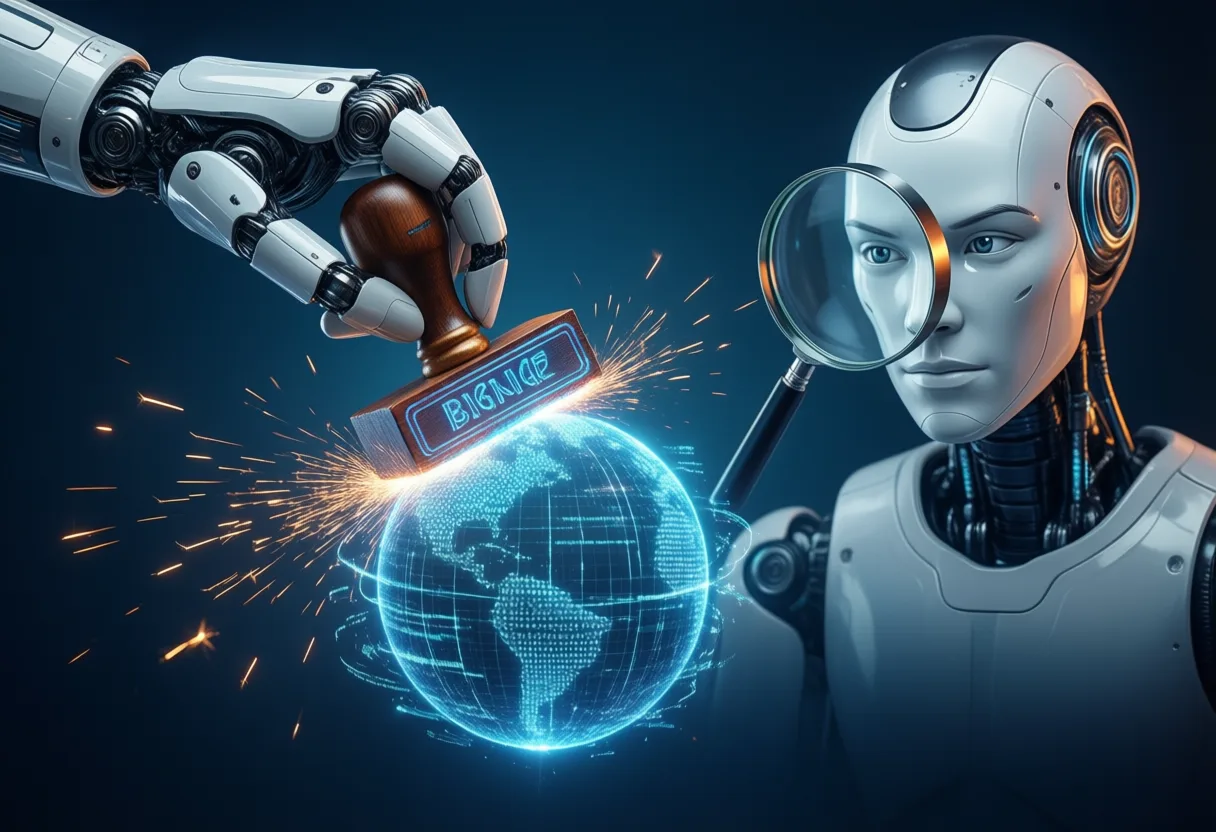

AI agents are stepping into homes and businesses, promising to simplify tasks and boost efficiency. But while they can automate routines and analyze patterns, they still fall short in areas requiring emotional awareness, adaptability, and deep judgment.
Can It Watch the Security Cam for 24 Hours Straight?
AI agents excel at continuous monitoring, making them ideal for watching security feeds without fatigue. Unlike humans, they don’t need breaks, distractions, or sleep-allowing them to flag unusual activity around the clock.
They use pattern recognition to detect deviations, such as a person entering a restricted area at odd hours. This constant vigilance helps homeowners and small business owners maintain baseline security with minimal intervention.
Still, They can’t interpret context like a human would. A cat triggering motion sensors or a delivery driver approaching the door may prompt false alerts. The agent might log an event but won’t inherently know whether it’s routine or a real threat.
- Detects movement consistently
- Flags anomalies based on learned behavior
- Cannot assess intent or situational nuance
This means while the system watches non-stop, Human review is often needed To determine the seriousness of an alert. The strength lies in persistence, not perception.
Handling the Domino Effect of Multi-Step Tasks
AI agents can manage sequences of actions when the steps are clearly defined. For example, they can trigger a morning routine: turning on lights, reading the weather, and starting the coffee maker-all from a single voice command.
These agents rely on predictive analytics and pre-built workflows to execute multi-step tasks efficiently. Using data from past behaviors, they anticipate needs and act proactively within set parameters.
But when one step fails or changes unexpectedly, the chain can break. If the coffee machine is unplugged, the agent won’t notice unless explicitly programmed to verify appliance status.
- Follows scripted sequences reliably
- Uses historical data to predict next actions
- Struggles when dependencies shift without notice
A true domino effect-where one adjustment triggers cascading recalculations-requires adaptive reasoning that most consumer agents lack. They follow plans, but Don’t rebuild them on the fly.

Juggling Apps Like a Human Multitasker
Modern AI agents can interact with Multiple digital Tools, pulling data from calendars, email, messaging apps, and smart home systems. This allows them to coordinate reminders, schedule meetings, or adjust home settings across platforms.
For instance, an agent might check your calendar, see a meeting moved, then update your smart display and send a text to a colleague confirming attendance. These integrations streamline daily operations.
However, seamless cross-app functionality depends heavily on compatibility and permissions. If one app lacks an open API or changes its interface, the agent may fail silently.
- Operates across connected services
- Automates data transfer between tools
- Limited by technical constraints and access
True multitasking-switching focus based on priority shifts-remains out of reach. Agents process commands sequentially, not intuitively. They don’t decide which task matters more in the moment unless explicitly guided.
When the Script Breaks: Dealing with the Unexpected
AI agents thrive in predictable environments where Rules Are clear and outcomes are measurable. They handle routine customer inquiries, manage inventory logs, or control thermostat settings with high accuracy.
But when faced with novel situations-like a sudden power outage, a new software update, or a unique customer complaint-they struggle. There’s no built-in ability to improvise or ask clarifying questions beyond preset options.
Without a script, many agents default to looping responses or handing off to human support. They lack the instinct to assess urgency or reframe problems creatively.
- Performs best within known parameters
- Fails when inputs fall outside training data
- Cannot generate new solutions spontaneously
This limitation isn't a flaw-it's a design feature meant to prevent erratic behavior. Yet it underscores why Unstructured challenges still require human oversight.
Reading the Room-Literally and Emotionally
Some AI agents integrate facial or voice analysis to estimate mood, but these features remain rudimentary. They might detect raised voices or prolonged silence and label them as “tense” or “calm,” but interpretation is shallow.
They cannot grasp sarcasm, cultural nuances, or subtle shifts in tone that signal frustration, humor, or grief. A joke delivered with a straight face could be misread as hostility.
In customer service roles, this Creates risk. An agent might respond to a sarcastic comment with literal accuracy while missing the emotional core entirely.
- Identifies basic vocal or visual cues
- Lacks empathy and contextual understanding
- Cannot build rapport or trust organically
As noted in industry insights, AI agents are not designed to sense when a conversation needs compassion. That layer of emotional intelligence remains uniquely human-and irreplaceable in sensitive interactions.

Making Judgment Calls Without a Rulebook
Judgment involves weighing unquantifiable factors: ethics, long-term impact, fairness, or brand reputation. AI agents operate on logic trees and probabilities, not principles.
When a customer demands an exception-say, a refund outside policy-the agent follows predefined thresholds. It won’t consider loyalty history, current sentiment, or strategic goodwill unless those variables are coded in advance.
It can’t ask, “What’s the right thing here?” Because “right” isn’t a programmable metric. Original judgment-especially in gray areas-is something today’s AI does not possess.
- Applies rules consistently
- Cannot balance competing values
- Relies on human-defined boundaries
Even advanced systems using predictive analytics can only suggest actions based on past patterns, not invent morally Sound decisions In unprecedented scenarios.
The Myth of True Autonomy in Everyday Tools
Many marketing messages suggest consumer AI agents work independently, learning and acting on their own. In reality, Autonomy is highly constrained.
These agents function within ecosystems controlled by developers, governed by algorithms, and limited by data availability. Every action traces back to human design choices.
They may appear autonomous when adjusting room temperature or ordering groceries, but each capability was enabled through deliberate programming and training.
- Operates within narrow scopes
- Requires ongoing maintenance and updates
- Depends on human oversight for reliability
True self-direction-setting personal goals, evaluating success, evolving purpose-doesn’t exist in current consumer models. The illusion of independence masks a deeply dependent system.
Where Personalization Hits Its Limits
Personalization is one of AI’s strongest selling points. Agents learn preferences over time, suggesting music, optimizing commute routes, or tailoring news feeds.
Using predictive analytics, they identify optimal times to message customers or recommend products based on behavior trends. This Level Of customization enhances user experience significantly.
But personalization stops short when deeper identity, values, or life changes come into play. An agent might keep recommending workout gear after you’ve injured your knee-unless you explicitly change settings.
- Adapts to observable habits
- Misses internal motivations or shifts
- Cannot infer meaning behind actions
The gap lies in understanding Why Someone does something, not just What They do. Without introspection, Personalization remains surface-level.

Knowing When to Hand Off to a Human
One of the most critical capabilities in any AI system is recognizing its limits. Advanced agents are designed to escalate complex issues to human operators-but not all do so effectively.
When a request involves ambiguity, emotion, or ethical weight, the smartest move is delegation. Yet some systems delay handoff, attempting to resolve matters beyond their scope.
This can frustrate users who need empathy or creative problem-solving, not repetitive prompts. Timely escalation preserves trust and ensures better outcomes.
- Should detect confusion or dissatisfaction
- Must prioritize resolution over automation
- Failure to hand off increases liability risks
As responsibility may rest with providers, deployers, or integrators, ensuring smooth transitions isn’t just good service-it’s a legal and reputational necessity.
The Fine Line Between Help and Overreach
AI agents aim to assist, not control. But without clear boundaries, they can overstep-adjusting settings without consent, making purchases, or sharing data inappropriately.
Consumers expect convenience, but not at the cost of autonomy. An agent that books travel without confirmation or disables security cameras “to save energy” crosses a line.
Transparency is key. Users must understand what the agent is doing, why, and how to override it. Overstating the role or capabilities of AI violates consumer trust-and potentially the law.
- Actions should be explainable and reversible
- Consent is required for significant decisions
- Clarity prevents misuse and builds confidence
Staying helpful without becoming intrusive requires thoughtful design and constant alignment with user intent.
What You Should Actually Expect at This Stage
Right now, consumer AI agents are powerful assistants, not replacements. They automate repetitive tasks, analyze data patterns, and improve efficiency Across digital And physical environments.
You can expect them to manage schedules, control smart devices, filter communications, and offer timely suggestions based on your habits. Their value lies in consistency and speed.
But don’t expect creativity, emotional depth, or independent decision-making. They won’t negotiate deals, comfort a grieving client, or pivot strategies during a crisis.
- Best used as force multipliers
- Depend on human guidance and oversight
- Expand capacity, not consciousness
The future of AI isn’t about building machines that replace us-it’s about creating tools that help ambitious entrepreneurs work smarter, faster, and with greater focus on what truly matters: people.
| Capability | Can Do | Cannot Do |
|---|---|---|
| Security Monitoring | Detect movement continuously, flag anomalies | Assess intent or situational nuance |
| Multi-Step Tasks | Follow scripted sequences, use historical data | Adapt when dependencies shift unexpectedly |
| App Integration | Automate data transfer between tools | Handle silent failures from incompatible APIs |
| Emotional Awareness | Identify basic vocal or visual cues | Understand sarcasm or build trust organically |
| Judgment Calls | Apply rules consistently | Balance competing values or improvise |
| Autonomy | Operate within narrow, predefined scopes | Set personal goals or evolve purpose independently |
| Personalization | Adapt to observable habits and trends | Infer meaning behind actions or life changes |
What Today’s AI Helpers Can Actually Handle
Where AI Shines Behind the Scenes
You might not realize it, but AI agents are already working quietly in the background, making routine digital tasks a little smoother. They’re great at watching things constantly-like monitoring inventory levels or tracking customer behavior-without ever needing a break. Using predictive smarts, they can analyze patterns and figure out the best time to send a message or launch a campaign, all on their own. These agents follow step-by-step instructions well, especially when the rules are clear, and they can juggle multiple digital tools to complete jobs like booking appointments or updating records across systems.
The Human Touch Still Rules
But don’t expect them to replace your favorite customer rep anytime soon. They can help resolve basic issues and cut down wait times, but they’re not built to read between the lines, pick up on emotional cues, or build real rapport. Tasks that require original judgment, long-term planning, or understanding subtle context are still out of reach. An AI agent won’t sense frustration in your tone or know when to pivot the conversation-it sticks to the script. That’s not a flaw; it’s by design, keeping interactions honest and within safe boundaries.
Who’s in Charge When Things Go Off Track?
If an AI agent gives the wrong info or missteps, someone still has to answer for it. Responsibility could fall on the company using it, the tech provider behind it, or the team that set it up. That’s why businesses need to train these systems carefully and avoid claiming they’re more capable than they really are. Overpromising leads to disappointment and can even break consumer rules. Meanwhile, new AI tools are being built to help artists, small businesses, and workers push back against unfair digital practices-showing that when designed fairly, these agents can actually support people instead of replacing them. Explore more stories, videos, and creators on Loaded.
Signed records add evidence, not certainty
\nBuilders who want a live example can read What Signed AI Agent Messages Can Actually Prove And inspect the Loaded A2A network. The example preserves signed envelope bytes and verification keys while keeping factual review separate from proof that a particular key signed a record.
\nFrequently Asked Questions
Can AI agents handle multi-step tasks when something goes wrong?
AI agents can manage multi-step tasks if steps are clearly defined. They struggle when one step fails unexpectedly, as they lack adaptive reasoning to adjust the rest of the sequence on the fly.
Do AI agents understand human emotions?
AI agents can detect basic vocal or visual cues like raised voices or silence but cannot grasp sarcasm, cultural nuances, or emotional context. They lack empathy and cannot build rapport organically.
When should AI agents hand off to a human?
AI agents should hand off to humans when tasks involve ambiguity, emotional weight, or ethical judgment. Timely escalation preserves trust and ensures better outcomes in complex situations.
This article was produced with AI assistance. How Reactor Magazine uses AI.
Jessa explores the evolving intersection of artificial intelligence and daily business innovation, focusing on ethical design and scalable solutions. She translates complex systems into actionable insights, emphasizing human impact over technical jargon.