New technologies don’t emerge in isolation. They rise, evolve, and often fall in rhythm with market energy, Consumer readiness, and infrastructure maturity. Behind every breakthrough lies a pattern-not a straight line, but a loop.
The Rhythm of What’s Next
Technology moves in waves. Each wave begins not with a product launch, but with a shift in perception. Someone sees a problem differently. A new tool becomes accessible. A group of Builders starts Experimenting.
This early phase is quiet. It happens in labs, garages, and late-night coding sessions. There’s no fanfare. Just curiosity. The ideas that survive are not always the flashiest-they’re the ones that solve real friction.
Eventually, attention follows. Media picks up the signal. Investors lean in. The cycle gains momentum. What was once fringe becomes front-page. And with attention comes pressure-pressure to scale, to deliver, to justify the hype.
- Early innovation thrives in obscurity
- Awareness grows through demonstration, not declaration
- Momentum builds when practical use meets public imagination
But momentum is not immunity. The same forces that amplify can also distort. Expectations inflate. Timelines compress. The technology is asked to do too much, too soon.
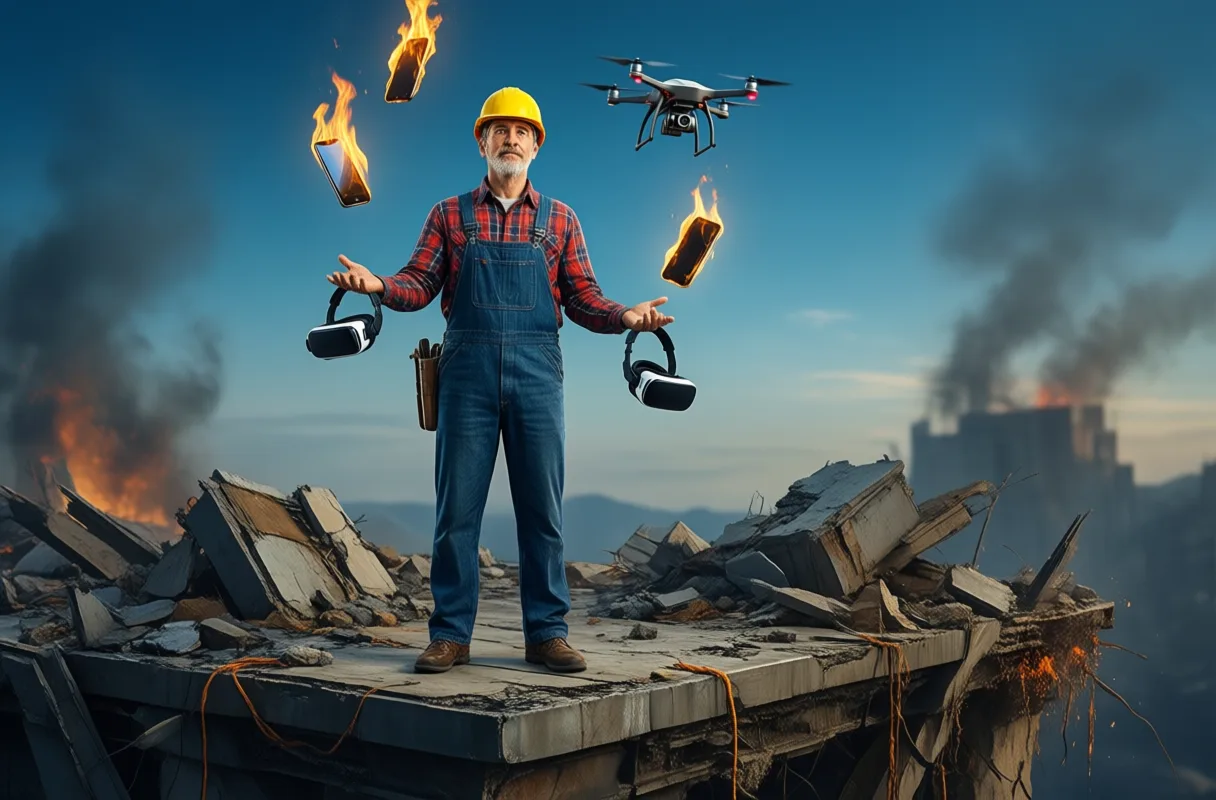
From Hype to Reality Check
Every cycle hits a wall. The peak of excitement often precedes a dip in credibility. Promises outpace performance. Early adopters feel let down. Skeptics grow louder.
This phase is not failure. It’s filtration. The market separates the durable from the disposable. Technologies that lack utility, scalability, or alignment with human behavior begin to fade.
But others adapt. Founders iterate. Engineers refine. The core idea survives, even if the original form does not. Blockchain moved from crypto mania to backend infrastructure. VR shifted from social hype to enterprise training.
The dip is where real work happens. It’s unglamorous. It’s necessary. Survival in the cycle depends not on attention, but on resilience.
- Public interest wanes, but development continues
- Real-world integration replaces speculative use
- The strongest ideas become quieter, but more powerful
This is the quiet pivot-from “What can this do?” To “How can this serve?”
The Quiet Reinvention
After the noise fades, a new phase begins. The technology stops being the story. It becomes part of the story. It enables something else.
AI is no longer just chatbots and image generators. It’s embedded in search, customer service, diagnostics, and design. It’s less visible, but more influential. The tools that once seemed revolutionary now feel routine.
This is the mark of maturity. When innovation disappears into the background, it has won.
And quietly, somewhere else, the Next cycle Begins. A founder codes through the night. A lab publishes a paper. A problem long ignored suddenly seems solvable.
The Loop turns Again-not by chance, but by choice. Innovation cycles don’t run on technology alone. They run on persistence.
Building Through the Phases
Entrepreneurs don’t control the loop. But they can learn its Rhythm. Timing is not about catching the wave at the peak-it’s about entering early enough to learn, and staying long enough to matter.
Launch too soon, and you educate the market for someone else. Launch too late, and you’re playing catch-up. The sweet spot is narrow, but navigable.
- Understand where your space is in the cycle
- Let go of the need for immediate validation
- Focus on solving a problem that won’t go away
Resilience means building when no one’s watching. It means trusting the trajectory, even when the headlines shift.
Success in the innovation cycle isn’t about being first. It’s about being last-still standing, still improving, still shipping.

The Long Arc of Impact
The most transformative technologies don’t dominate for a moment. They endure for decades. Their influence grows not through virality, but through quiet integration.
Today’s Overlooked tool could be tomorrow’s foundation. The cycle rewards patience. It punishes impatience.
But it rewards vision. It rewards grit. It rewards those who build not for the spotlight, but for the substance.
The loop doesn’t care about your timeline. It responds to value-delivered consistently, improved relentlessly.
Stay in the game long enough, and you’ll see the cycle turn in your favor. Not because you predicted it, but because you persisted through it.
The Spin Cycle of Tech Trends
Round and Round It Goes
Ever notice how foldable phones suddenly exploded after disappearing for nearly a decade? That’s the tech trend loop in action-ideas don’t die, they just take long naps. A concept like virtual reality flooded the market in the '90s with clunky headsets that fizzled out, only to reemerge decades later with better hardware and real-world applications. The loop isn’t about reinvention; it’s about timing, infrastructure, and consumer readiness aligning just right.
Hype, Bust, Then Breakthrough
The journey from “next big thing” to “meh” and back again follows a surprisingly predictable rhythm. Wearables were once dismissed as fitness tracker fads, but persistent refinement turned them into health-monitoring tools embedded in daily life. This cycle often starts with wild speculation, crashes when expectations outpace reality, then quietly rebuilds on lessons learned. Many failed products weren’t bad ideas-just early ones.
Borrow, Remix, Repeat
Few trends are truly original. Today’s smart home boom leans heavily on automation concepts tested in the 1970s, complete with voice controls that would’ve sounded like sci-fi back then. Even AI-driven assistants echo earlier attempts at digital helpers, now powered by data and processing speeds that simply didn’t exist before. The loop rewards patience: the same problem gets solved not once, but multiple times, each round a little closer to getting it right. Explore more stories, videos, and creators on Loaded.
Frequently Asked Questions
What is the tech trend loop?
The tech trend loop is a recurring pattern where new technologies emerge, gain hype, face a reality check, and then either fade or adapt for long-term use. It reflects how innovation cycles are shaped by market energy, consumer readiness, and infrastructure.
Why do some technologies fail during the hype phase?
Technologies often fail during the hype phase because expectations outpace performance. Promises are made too soon, timelines compress, and the technology is asked to do too much before it's ready, leading to disappointment and skepticism.
How do technologies survive the dip in the innovation cycle?
Technologies survive the dip by adapting and focusing on real-world utility. Founders iterate, engineers refine, and the strongest ideas shift from speculative use to practical integration, often becoming quieter but more powerful.
What role does persistence play in innovation cycles?
Persistence is crucial because success in innovation cycles comes not from being first but from staying long enough to matter. Building through obscurity and continuing development when no one is watching leads to lasting impact.
This article was produced with AI assistance. How Reactor Magazine uses AI.
Jessa explores the evolving intersection of artificial intelligence and daily business innovation, focusing on ethical design and scalable solutions. She translates complex systems into actionable insights, emphasizing human impact over technical jargon.