

You log in. Again. Password. OTP. Selfie with a peace sign. Feels like a circus. But behind the scenes, the game has changed-Digital identity Isn’t about proving who you are. It’s about proving it fast, securely, and without surrendering your soul. And if you're still treating KYC like a compliance checkbox, you're already behind.
How Digital Identity Is Evolving Beyond Traditional Verification
Remember paper forms? Wet signatures? The smell of stale coffee and suspicion in bank lobbies? That world is dying. Fast. Digital identity today isn’t just digitizing old processes-it’s rebuilding trust from the ground up. We’re moving from “show me your ID” To “prove you’re you-without showing me anything.” That’s the new standard.
Legacy systems relied on static data. Name. Address. SSN. Date of birth. All brittle. All hackable. All sitting in databases like candy in a kid’s reach. Now, identity is dynamic. It breathes. It adapts. It learns. It’s less about documents and more about behavior, context, and cryptographic truth.
This shift isn’t just Technical-it’s psychological. Users don’t want friction. They want speed. They want privacy. They want to be trusted until proven otherwise. And businesses? They want compliance without compromise. The result? A quiet revolution in how we verify, authenticate, and authorize in the digital wild.
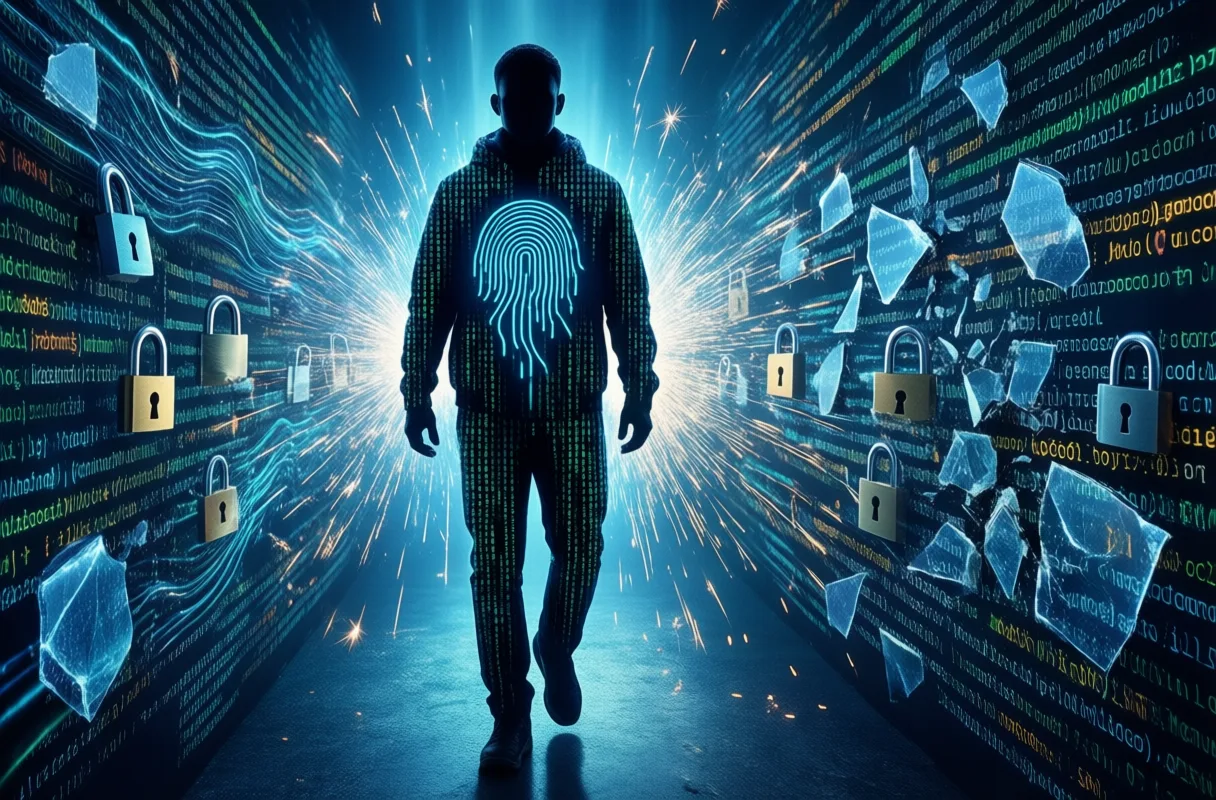
Emerging Technologies Reshaping Identity Assurance
The tools are here. They’re not sci-fi. They’re not vaporware. They’re live, scaling, and redefining what’s possible in identity assurance. And they’re not waiting for you to catch up.
1. Biometric Authentication: From Fingerprints to Behavioral Analysis
Fingerprints and facial scans are just the warm-up. We’re now tracking how you type, swipe, hold your phone. The rhythm of your keystrokes. The tilt of your wrist. These micro-behaviors form a living password-one you don’t even know you’re giving. It’s not just Who You are. It’s How You are.
This isn’t about catching fraud after the fact. It’s about stopping it mid-breath. A login from your device, your location, your face-but your typing speed is off by 15%? Red flag. Silent. Instant. Effective.
And no, this isn’t Big Brother. It’s Big Precision. The tech doesn’t care about your politics or your playlist. It cares about consistency. Deviation gets attention. Normal flow gets invisible approval.
2. Decentralized Identifiers and Self-Sovereign Identity Frameworks
Imagine owning your identity like you own cash. No bank. No gatekeeper. Just you. That’s self-sovereign identity. You hold your credentials. You choose when to share them. No third party hoards your data. No Breach Can steal what isn’t stored.
Decentralized identifiers (DIDs) make this real. They’re unique, cryptographically secure, and not tied to any central registry. You control the keys. You decide who sees what. A landlord gets proof of income-without seeing your full bank history. A clinic gets your blood type-without your name.
This isn’t theory. It’s being built. Deployed. Tested. And it’s the first real shot at putting power back in the user’s hands-where it belongs.
3. Artificial Intelligence in Anomaly Detection and Risk Scoring
AI doesn’t sleep. It doesn’t get bored. It watches millions of transactions, logins, applications-spotting patterns humans would miss in a lifetime. One login from Tokyo at 3 AM. Another from Chicago 45 minutes later. Impossible? AI flags it before the second click.
Risk scoring is no longer a static checklist. It’s dynamic. Real-time. Context-aware. A high-risk score doesn’t mean denial-it means Verify harder. Maybe a quick biometric check. Maybe a behavioral replay. The system adapts. So should you.
And yes, AI can be biased. Can be wrong. But trained right, monitored closely, it’s the best fraud cop we’ve ever had. Silent. Scalable. Relentless.
4. Blockchain-Based Credentials for Tamper-Resistant Records
Blockchain isn’t just for crypto bros. It’s becoming the backbone of trusted credentials. Degrees. Licenses. Employment history. Stored on-chain, cryptographically sealed. Tamper-proof. Verifiable in seconds.
No more calling HR departments for verification. No more forged diplomas. The record is immutable. The issuer is verified. The holder controls access. It’s trust, baked into code.
This isn’t about replacing institutions. It’s about making them more efficient. More honest. More resilient. And it’s one of the quietest, most powerful shifts in the Technology Trends Shaping 2024 in AI and connectivity.
5. Zero-Knowledge Proofs Enabling Privacy-Preserving Verification
Here’s the mind-bender: proving something is true-without revealing what it is. Zero-knowledge proofs let you say, “Yes, I’m over 18,” without showing your birthdate. “Yes, I have $10k in my account,” without exposing the balance.
It’s like a bouncer who checks your ID behind a curtain. He sees the stamp. You keep the card. No data leakage. No exposure. Just proof.
This tech is hard. Complex. But it’s the holy grail for privacy and compliance. And it’s moving from labs to live systems-faster than most realize.
6. Adaptive Authentication That Responds to Contextual Risk
One-size-fits-all logins are dead. Adaptive authentication adjusts the security level based on risk. Logging in from your home Wi-Fi at noon? Smooth sail. Same account, public Wi-Fi, midnight, new device? Expect questions.
It’s not about making things harder. It’s about making them smarter. Low risk? Zero friction. High risk? Step-up verification. Biometric. OTP. Challenge question. The system decides-on the fly.
This isn’t just better security. It’s better UX. Because the best security you don’t notice.
7. Interoperable Identity Networks Across Jurisdictions
You cross a border. Your digital identity doesn’t stop working. That’s the goal. Interoperable networks let systems talk across countries, regulators, platforms. A KYC in Germany recognized in Singapore. A credential issued in Brazil verified in Canada.
No more re-onboarding. No more duplicate checks. Just seamless, trusted exchange-backed by standards, not politics.
It’s not here yet. But the pieces are aligning. And when it clicks, it’ll feel like the internet did in 1995-obvious, inevitable, transformative.
Common Myths About Identity Security in Regulated Industries
Let’s kill the myths. Now.
Myth 1: More data = more security. Nope. More data = more targets. Hackers don’t want your name. They want your SSN, DOB, mother’s maiden name-the trifecta of fraud. The less you collect, the less you lose.
Myth 2: Compliance means security. Wrong. Checking boxes doesn’t stop breaches. GDPR, KYC, AML-they set floors, not ceilings. Real security goes beyond forms. It’s in design. In architecture. In culture.
Myth 3: Biometrics can be stolen and reused. Not like passwords. Your fingerprint isn’t sent as an image. It’s turned into a mathematical template. Encrypted. Stored locally. Can’t be reverse-engineered. Can’t be reused.
Myth 4: Decentralized identity is too risky. Says who? Centralized databases get hacked daily. Decentralized systems? No single point of failure. No honey pot. The risk isn’t in the tech-it’s in clinging to the old.
Myth 5: Users won’t adopt new systems. They already are. Face ID. Google Sign-In. Apple Wallet. People adopt what’s easy and safe. Build it right, and they’ll come-running.
What These Advances Mean for Compliance and User Experience
Compliance used to mean friction. KYC meant forms. Delays. Drop-offs. Now? It can mean speed. Trust. Conversion.
Imagine onboarding a customer in 47 seconds. Fully verified. Fully compliant. No paperwork. No waiting. Just seamless, secure, silent validation. That’s not a dream. It’s happening.
And here’s the kicker: better security Improves UX. When systems adapt, when verification is invisible, when users feel in control-that’s when trust grows. And trust? That’s the currency of business.
Regulators aren’t the enemy. They’re the floor. The real win is building systems that exceed requirements while delighting users. That’s how you win markets. That’s how you scale.
These shifts aren’t just about tech. They’re about Rethinking the relationship between user and institution. From suspicion to trust. From control to collaboration. From friction to flow.
And if you’re not aligning with these Technology Trends Examples shaping 2024 innovation, you’re not innovating. You’re just maintaining.

Where the Future of Trusted Identity Might Take Us
We’re moving toward a world where identity is invisible. Not gone. Not ignored. But so seamless, so secure, that you forget it’s there.
You walk into a bank. The system recognizes you-not with a camera, but with context, device, behavior. No login. No form. Just service.
You apply for a loan. Your credentials-education, income, credit-are verified in seconds. Not pulled. Not shared. Proven. Without exposing a single raw data point.
You travel. Cross borders. Your digital ID, recognized globally. Verified instantly. No queues. No questions.
This isn’t fantasy. It’s the direction we’re headed. Driven by real tech. Real demand. Real pain in today’s broken systems.
And the deeper truth? Identity Isn’t just a gatekeeper. It’s an enabler. It’s the key to financial inclusion, to privacy, to access. To freedom.
The companies that get this won’t just survive. They’ll lead. They’ll own the future. Because they understand: the best technology doesn’t just solve problems. It redefines what’s possible.
And if you want to see where it all connects-where AI, identity, and connectivity collide-start with understanding why Technology Trends meaning and why they shape our future. Then build like hell.
| Technology | Key Function | Privacy Benefit | Real-World Application |
|---|---|---|---|
| Biometric Authentication | Verifies identity via fingerprints, face, or behavior | Data stored locally as encrypted templates | Banking apps, phone unlocking |
| Self-Sovereign Identity | User-controlled credentials via decentralized identifiers | No third party stores user data | Sharing income proof without full bank history |
| Zero-Knowledge Proofs | Proves claims without revealing data | No raw data exposed during verification | Proving age without showing birthdate |
| Adaptive Authentication | Adjusts verification based on risk context | Minimizes data checks in low-risk scenarios | Step-up verification on public Wi-Fi |
| Blockchain Credentials | Stores tamper-proof records on-chain | Issuer and holder control access | Verifying degrees without contacting HR |
| AI Anomaly Detection | Scores risk using behavior and context | Flags fraud without storing extra user data | Detecting impossible login locations |
| Interoperable Identity Networks | Enables cross-border identity recognition | Reduces repeated data sharing | KYC in Germany accepted in Singapore |
How Tech Is Reshaping Identity Checks
Smarter Than Your Average Paperwork
Digital ID verification used to mean uploading a blurry photo of your driver’s license and waiting days. Now, real-time biometrics can confirm you’re a live person-not a photo or mask-using nothing more than your smartphone’s front camera. Some systems analyze micro-movements in facial muscles or ask you to blink, turning a 10-second selfie into a powerful fraud deterrent. This isn’t sci-fi; it’s already standard in banking apps and crypto exchanges aiming to stop fake accounts before they start.
From Fingerprint to Fintech
The same tech that unlocks your phone-fingerprint and facial recognition-now powers secure onboarding for everything from stock trading to telehealth. By replacing passwords and security questions with biometric data, companies reduce human error and make identity theft much harder. What’s more, decentralized identity models are emerging, letting users store verified credentials on their own devices and share them selectively-meaning you could prove your age at a bar without handing over your entire ID.
AI That Knows When Something’s Off
Artificial intelligence doesn’t just verify who you are-it spots when something feels “off.” Machine learning models analyze hundreds of data points during a KYC check, like typing speed, device location, and document quality, to flag suspicious behavior. A mismatch between a user’s declared location and IP address, or a slightly altered ID photo, can trigger extra checks automatically. These systems learn from every interaction, making fraud detection faster and more accurate over time-without slowing down legitimate users.
Frequently Asked Questions
What is self-sovereign identity and how does it work?
Self-sovereign identity allows individuals to own and control their digital identity without relying on a central authority. Users hold their credentials and choose when and what to share, using decentralized identifiers and cryptographic controls.
How do zero-knowledge proofs enhance privacy in identity verification?
Zero-knowledge proofs allow a user to prove a claim is true-like being over 18-without revealing the underlying data, such as a birthdate. This minimizes data exposure while maintaining verifiable trust.
Can biometric data be stolen and reused like passwords?
No, biometric data is converted into an encrypted mathematical template and stored locally, not as an image. It cannot be reverse-engineered or reused if intercepted.
How does adaptive authentication improve security and user experience?
Adaptive authentication adjusts security requirements based on contextual risk, like location or device. Low-risk logins proceed smoothly, while high-risk attempts trigger additional verification, balancing security with usability.
This article was produced with AI assistance. How Reactor Magazine uses AI.
Dwight covers extreme sports, personal aesthetics, and boundary-pushing lifestyles, blending cultural nuance with visceral storytelling. He seeks the philosophy behind risk, fashion, and self-reinvention in modern life.